Showing posts with label BlogBookTour. Show all posts

Victoria Alvear's THE CLEANSING

My dear friend Vicky is celebrating the release of her new historical thriller, THE CLEANSING. I was an early reader for the manuscript when she was working on it and have been rooting for this fabulous book ever since.

Midwest Book Review says about the book:
“Original, exceptional, deftly crafted and a simply riveting read from cover to cover, "The Cleansing" will hold a very special attraction for readers with an interest in a suspense thriller set in an Ancient Rome where the game of thrones is a blood sport -- and there's no guarantee of fairness or success.

With the publication of "The Cleansing", author Victoria Alvear reveals a genuine flair for the kind of eloquently descriptive attention, and narrative driven storytelling style that raises her historical thriller to an impressive level of literary excellence. While this hardcover edition of "The Cleansing" from Hypatia Press is especially and unreservedly recommended for community library collections, it should be noted for personal reading lists that it is also readily available in a digital book format (Kindle, $4.99).
Vicky stopped by to talk about it!

When Writing for Children Takes an Unexpected Turn

By Victoria Alvear

It has taken me more than a decade to get my upcoming novel published. At first, I stayed in my “lane” as a young adult novelist, but I could not sell my book to kids’ publishers. I came close once—a YA imprint editor brought my book to the marketing team, but they shot it down. “Too hard/weird to sell,” they claimed.

So, I went in hard on the weird and dark realism and shifted to the adult market, where there is greater room for the subtleties of sexual politics and the ugly harshness of a violent and misogynistic society. The Cleansing is historical fiction that tells the true story of a Vestal Virgin in ancient Rome falsely accused of having sex. And her desperate attempt to defend herself in court to avoid the death sentence that follows such a “crime.”

Blaming a woman’s sexuality for the crimes of men is not a new thing, but this story is so over the top it’s shocking. Yet it really happened: When 50,000 Romans fell in a single day at the Battle of Cannae, priests asserted that there could be only one reason why the “gods turned their back on Rome.” A Vestal priestess broke her vow of chastity. Accused of a crime she did not commit, my main character must defend herself against a hostile religious court and outwit the political leaders bent on avoiding accountability. (Sound familiar?)

This is a dark story with unnerving parallels to today’s purity culture and our society’s growing misogyny. Even today, many fundamentalist religious leaders blame women or LGBTQ folks for “having sex” as the reason why God sends natural disasters. Perhaps it was a blessing that the YA imprints passed on the story because, by rewriting it for the adult market, I could more fully expose how religion and powerful leaders use superstition and fear to hurt and punish the most vulnerable among us. Sometimes rejections turn into opportunities.

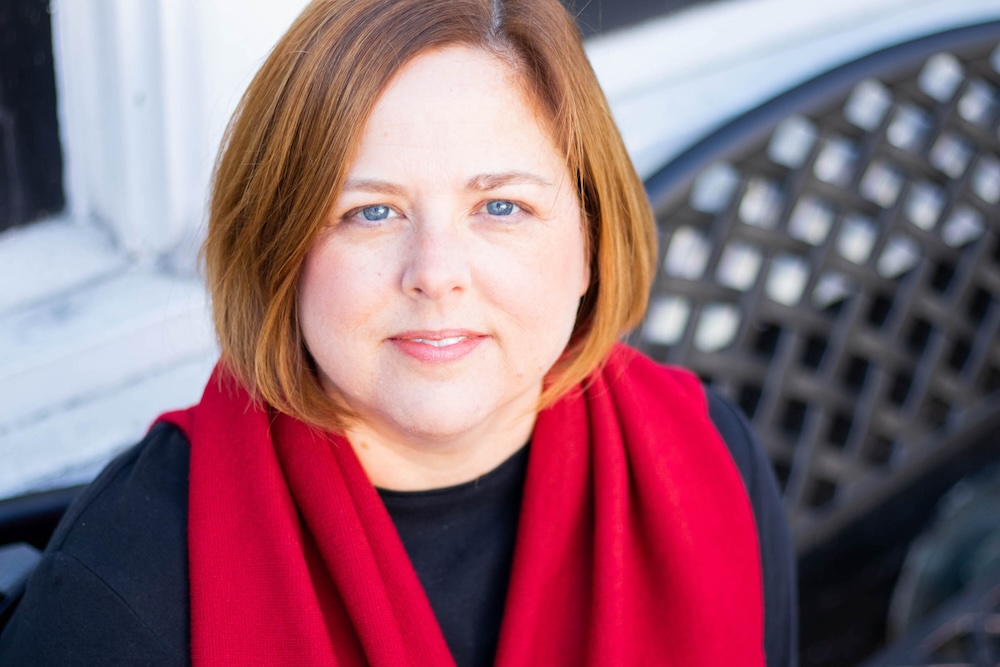
The Cleansing: A Novel of Ancient Rome, by Victoria Alvear, releases January 20, 2026, and is published by Hypatia Press. Victoria writes for children under the name Vicky Alvear Shecter, and is the author of multiple MG and YA books. Her website is: www.vickyalvearshecter.com.

Vicky has also been creating a series of fascinating bits of history on ancient Egypt on her Instagram. Go have a look!

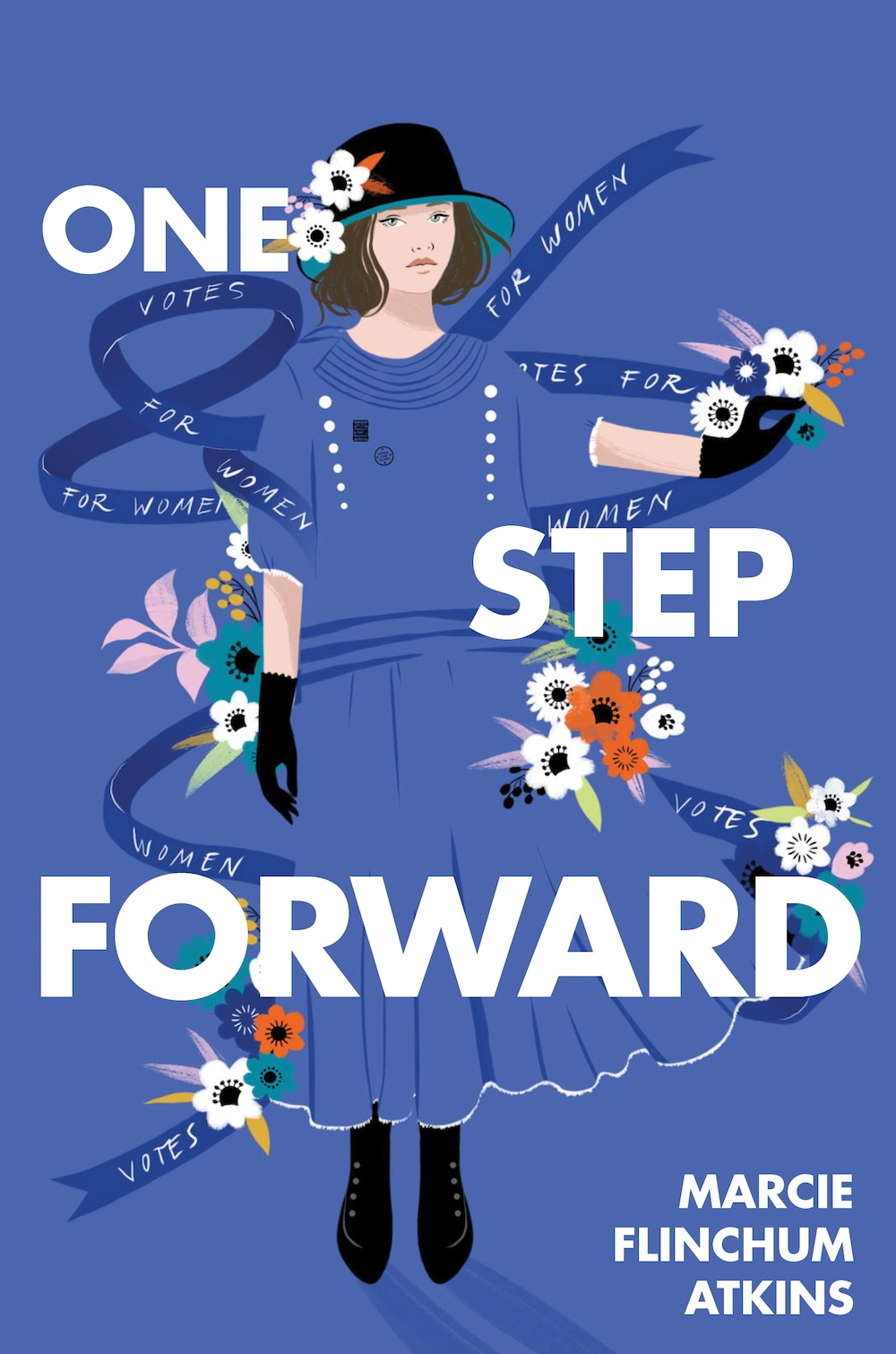
Marcie Flinchum Atkins' ONE STEP FORWARD

Hollins alumna Marcie Flinchum Atkins is celebrating the release of her new book, One Step Forward. She stopped by to talk about it...
Stories in My Backyard
By Marcie Flinchum Atkins
Versify/HarperCollins, March 4, 2025

      I didn’t know when I walked into a local museum located in an arts center, that I would be walking into my next book. When we moved from the Roanoke Valley to Northern Virginia in 2015, we learned that the Workhouse Arts Center in Lorton used to be a jail–and that it jailed women who fought for suffrage. I had to see it for myself. The first time I went to the museum, I truly couldn’t believe I’d never heard the story of the suffragists who were abused and force fed for protesting in front of the White House for fighting for the right to vote.
      I didn’t feel equipped to tell their story. Who was I to write about suffragists? I only knew about Alice Paul, and I didn’t even know much about her.
      By 2017, I gave myself permission to read and research their stories in earnest. I attended several local events that talked about the events at the Occoquan Workhouse. One day, I went on a tour in Washington, DC, and I realized one of the facts the tour guide mentioned about the suffragists was incorrect. At that point I knew I knew enough to write the story–or to at least get started.

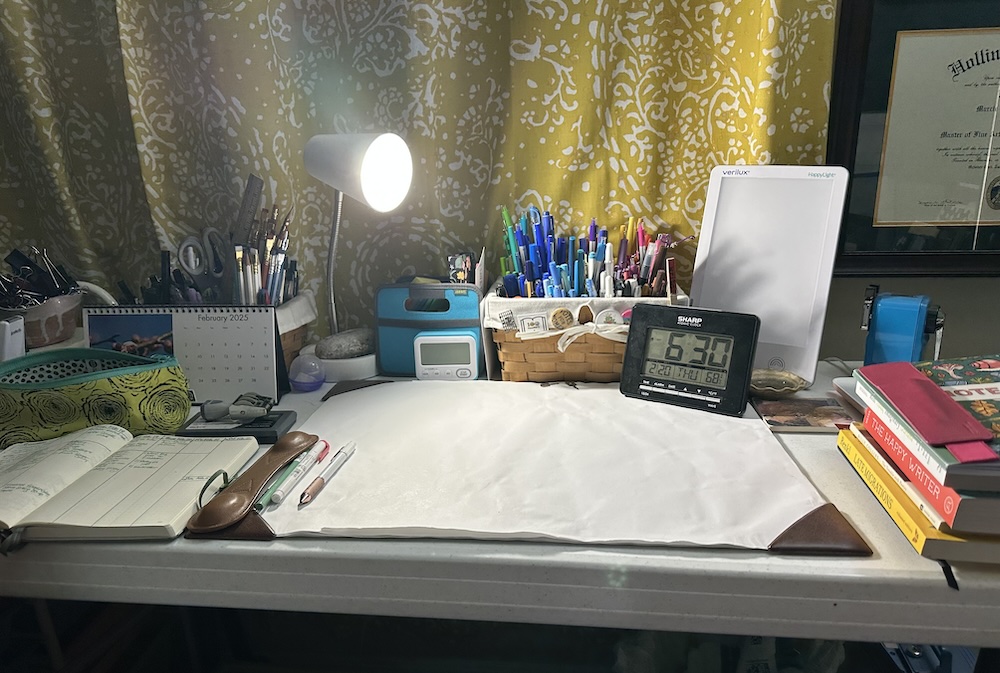
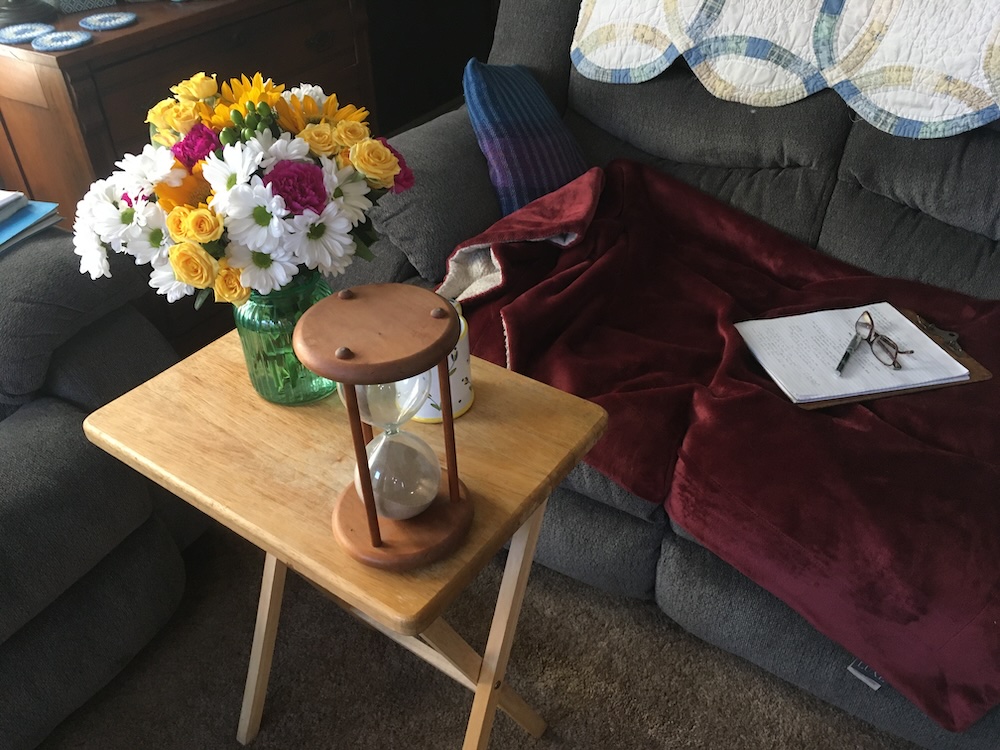
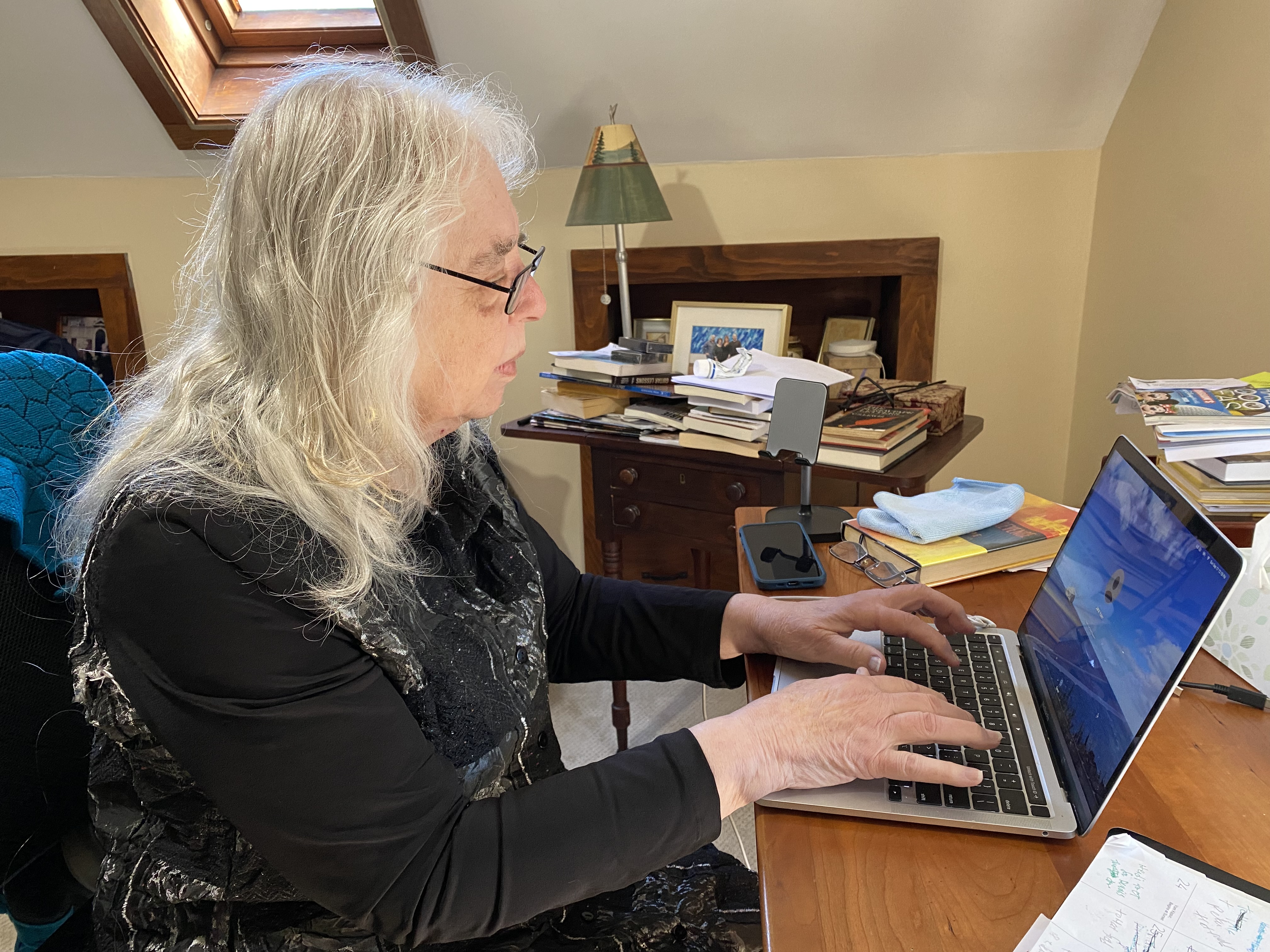
I have an analog desk where I read each morning and write by hand. I write almost all of my poetry and picture books by hand first before moving to the computer.

      I wrote One Step Forward from many different points of view. First I wrote it from the “we” voice of a multitude of suffragists, then a draft of 11 different characters’ points of view, and finally I settled on Matilda Young’s point of view.
      Matilda Young was the younger sister of a prominent suffragist, Joy Young. Matilda was also the youngest suffragist in a group of women who were arrested at the White House gates in November 1917 and then transported to the Occoquan Workhouse where they were beaten. It later became known as the Night of Terror. Matilda was only nineteen at the time.

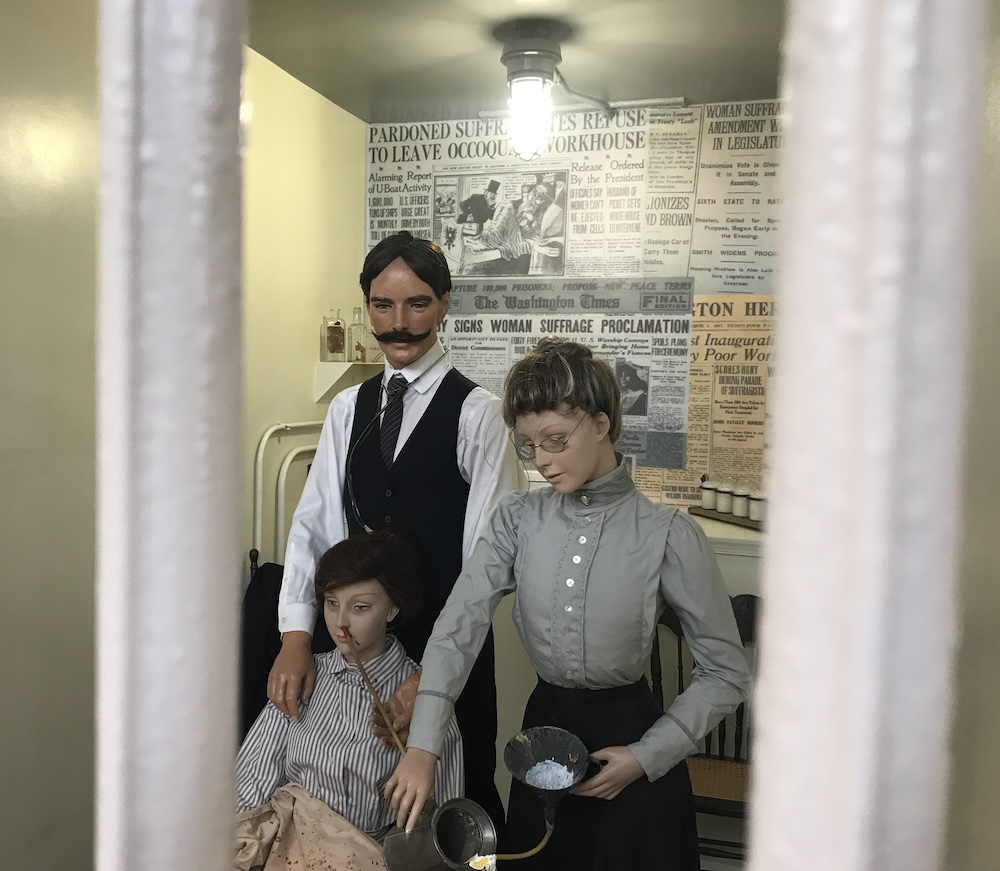
At the Lucy Burns Museum, one display shows how they force fed the suffragists an egg and milk mixture and poured it in a tube down their throats.

      One thing that never changed in the process of writing the story was the verse aspect. I knew the story–full of gritty details and emotions–needed to be told in verse.
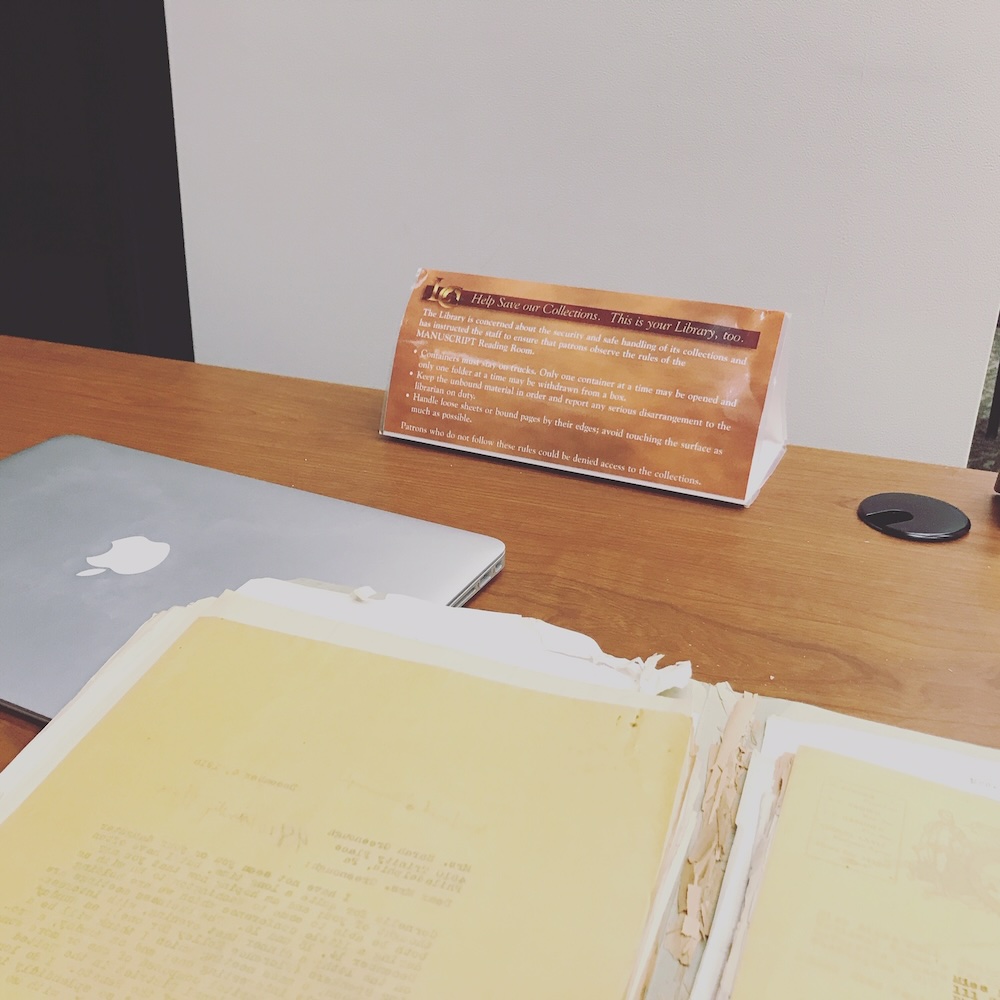
      The inspiration for this story was in my backyard (or about 10 miles away) at the Occoquan Workhouse (now The Lucy Burns Museum). More than that, I was able to do almost all of the research in my local area. I walked the neighborhoods between Matilda’s Washington, DC high school and her home on 18th Street NW and the 1913 Woman Suffrage Procession route down Pennsylvania Avenue. I stood at the White House gates and at Lafayette Square where they protested. I went to the Belmont-Paul Women’s Equity Museum on Capitol Hill, and went through the National Woman’s Party papers at the Library of Congress.

Going through the National Woman’s Party papers at the Library of Congress Manuscript Reading Room.

      The story covers seven years of Matilda’s journey from the 1913 Woman Suffrage Procession to the 1920 election. My journey of researching, writing, revising, and getting the book into the hands of readers spanned from 2017-2025–another seven year journey.
      One Step Forward comes out from Versify/HarperCollins on March 4, 2025.
Marcie Flinchum Atkins is a 2005 (MA) and 2011 (MFA) graduate of Hollins Children’s Literature program. She is a teacher-librarian in Northern Virginia. One Step Forward is her debut YA novel. Her nonfiction picture book Wait, Rest, Pause: Dormancy in Nature (Millbrook, 2019) was a Kirkus Best Informational Book of 2019. Her next nonfiction picture book, When Twilight Comes, is forthcoming from Chronicle in 2026. You can connect with Marcie at her website: www.marcieatkins.com

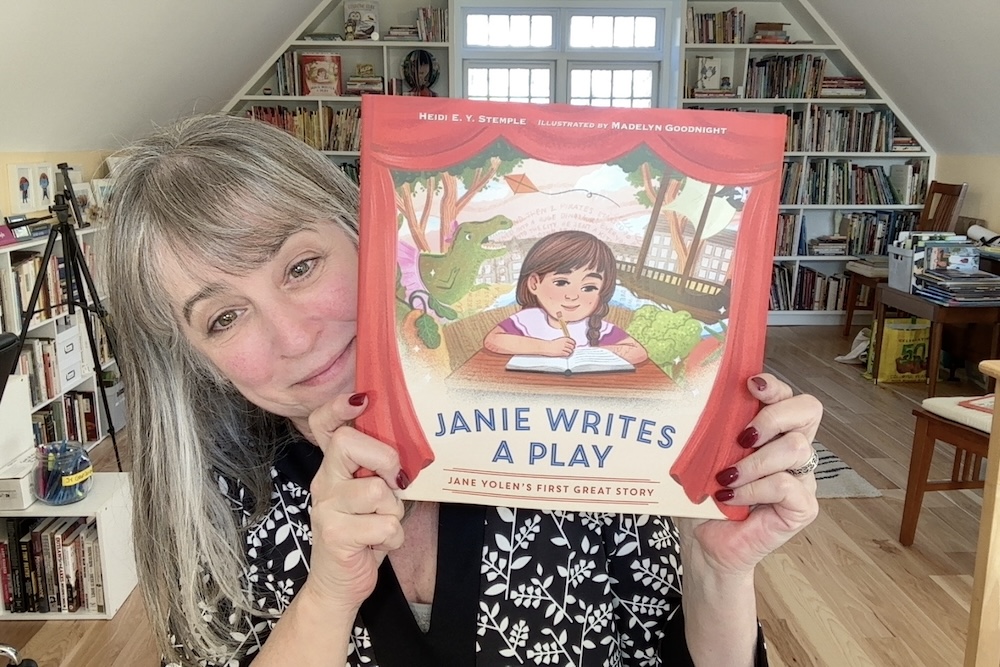
Heidi Stemple's JANIE WRITES A PLAY

Jane Yolen's daughter, prolific author Heidi Stemple, who also teaches in our graduate programs at Hollins University, has written a book about her mother's writing journey called JANIE WRITES A PLAY (illustrated by Madelyn Goodnight, published by Charlesbridge, Feb. 11, 2025). I'm happy to share this very special book release. Heidi dropped by to tell us more about it.
     My mother is a storyteller.
     Actually, that may be selling it short. If you know children’s books, my mother is THE storyteller.
     I am an author. Have been for 30 years and almost 50 books. In my family that makes me a slowpoke.
     My mother is Jane Yolen, author of 450 books. But, the book I want to talk to you about today isn’t one she wrote.
      My mom has been telling me the story of her “first big success as an author” for as long as I can remember. The story began: I always knew I wanted to be an author, my first big success was in the first grade when I wrote our school musical…” If you tell my mom about an incident like that, the first thing she will tell you is, “that’s a picture book! Go write it!” And because of this, I always assumed she would write the story herself someday. She never did. So, in late 2019, I sat down and started writing. I realized I didn’t have a ton of facts about this play, so I filled in the parts of my mom’s young life that I did know and fleshed out the story. At this same time, my mom had surgery after a nasty fall. While she was recovering, I continued working on the manuscript. When it was done, I read it to her.
     She was thrilled.
     I asked her a bunch of questions and worked those details in. I switched things I had gotten wrong. We had a fun time talking about her neighborhood and class.
     She and I were scheduled to teach a picture book intensive at SCBWI in NYC, but since she was still not so steady on her feet, she decided to back out. I asked one of my favorite editors, Yolanda Scott, to present with me and she said yes. When I visit NYC, I always meet with my agent Elizabeth. I brought her the manuscript and a crazy idea. “I want to hand the manuscript to Yolanda because she is my dream editor for this project…” Elizabeth agreed, even though we both knew it was bad form to hand your editor an unsolicited manuscript at a conference. (Please don’t do this!) To my great relief and joy, Yo was happy to hear about the concept and promised to read it. This was February, 2020. We had no idea what was on the horizon.
     Fast forward into what happened next—the pandemic. Everything was topsy turvy and books seemed less relevant and more relevant all at the same time. I spent my time making masks for teachers and librarians, posting free content for kids at home, and I wrote a lot. When it became clear that we were in it for the long haul, publishers began to settle into this new normal and Yo bought the book! This was still early 2020, April, I think. So a pretty quick purchase.
     You know what the BEST part was? I got to tell my mom that I had sold the book about her. I asked her how she felt about it. She told me this: “I feel proud at the wonderful job you have done and thrilled that I didn't have to write it!” When the first copy arrived at her house, (for some reason, Charlesbridge sends all our books to her house—but to be fair, we live next door to each other, share a PO box, and are fine with these mailing glitches) she didn’t read the name on the envelope. So, of course, she ripped open the package and she was the one who got to see the actual book. I may have been a little disappointed that I didn’t get to be the first one to open it… but, also, it seemed right for her to be the first. It is, after all, her story.
     Madelyn Goodnight’s art is perfect. When Yo presented her as the potential artist, she said, “she is so talented… she can do it all!” And since I was already a fan, (I mean, have you seen her color pallet in Traci Sorrel’s POWWOW DAY?) I got onboard at day one. I sent off photos of my mom as a child, my grandparents with young Janie, and some pictures of NYC during the 1940s.
She added so many cool things—the words swirling around little Janie as she writes in her notebook is my favorite. Oh, and the endpages!! I love the endpages! Madelyn made them into bookshelves with titles of my mom’s books. They are cozy and informative and so colorful. The perfect opening—both meaningful and playful. When an illustrator comes aboard the project, it ceases being just a story and it becomes a book.
      At the last minute, when the illustrations were done, all the revisions were in, and the book was set to go to print, my mom and I were in the car and we were talking about the book. She started singing one of the songs from the play. I pulled over and typed the lyrics into my phone and sent them off to Yo. She managed to get them into the illustrations!
     When I asked my mom to tell me what her hopes for this book are. She said she hope kids will think they can be the next Janie. As a follow up, I asked her, “do you hope people will buy this book?” Ever the pragmatist, she responded “Oh Heidi, everybody who writes a book hopes that.” Thankfully she redeemed herself by adding, “but, for me, this book is special for two reasons—one it’s my story, and two, it’s your telling.”

Thanks Mom!
Love you xoxoHeidi

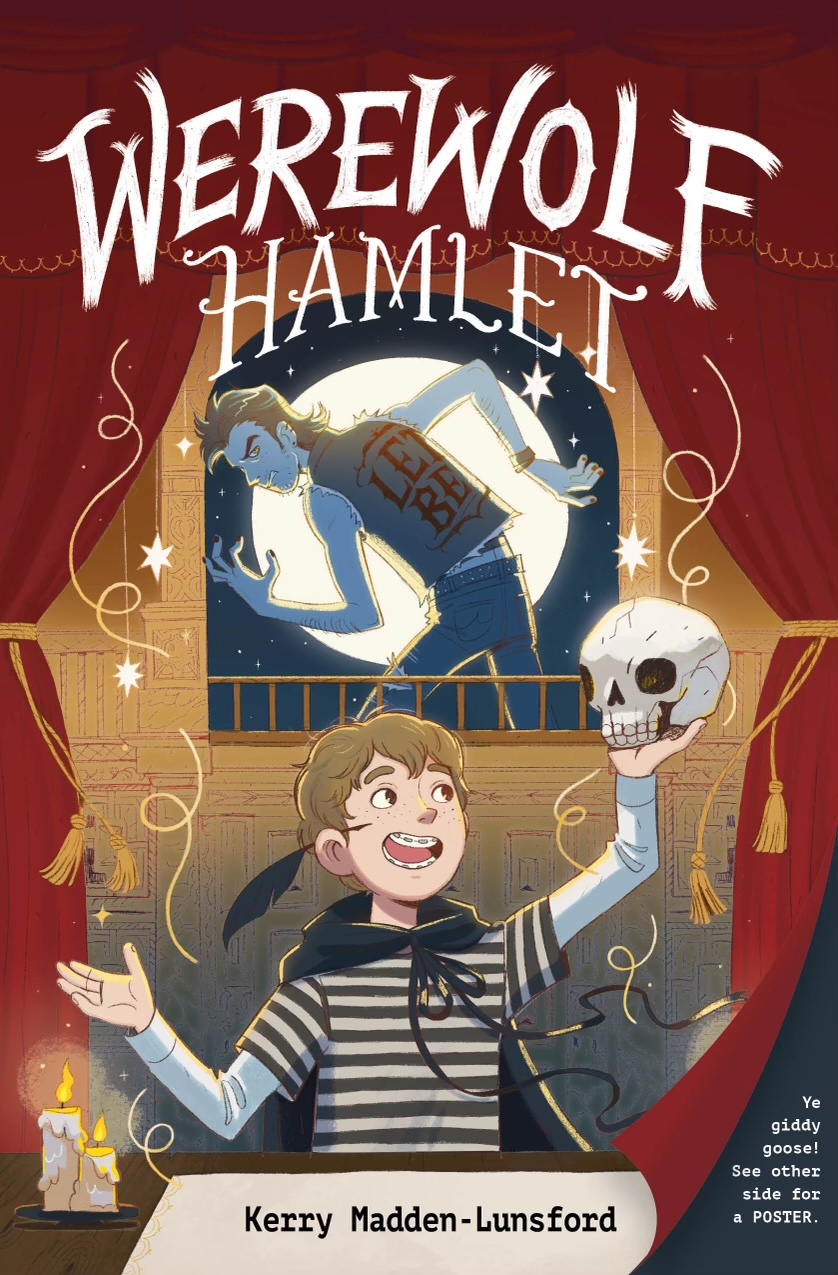
Kerry Madden's WEREWOLF HAMLET

My good friend Kerry Madden has a new book out, and it's a book of her heart. I can't wait to read it! She dropped by to talk about...
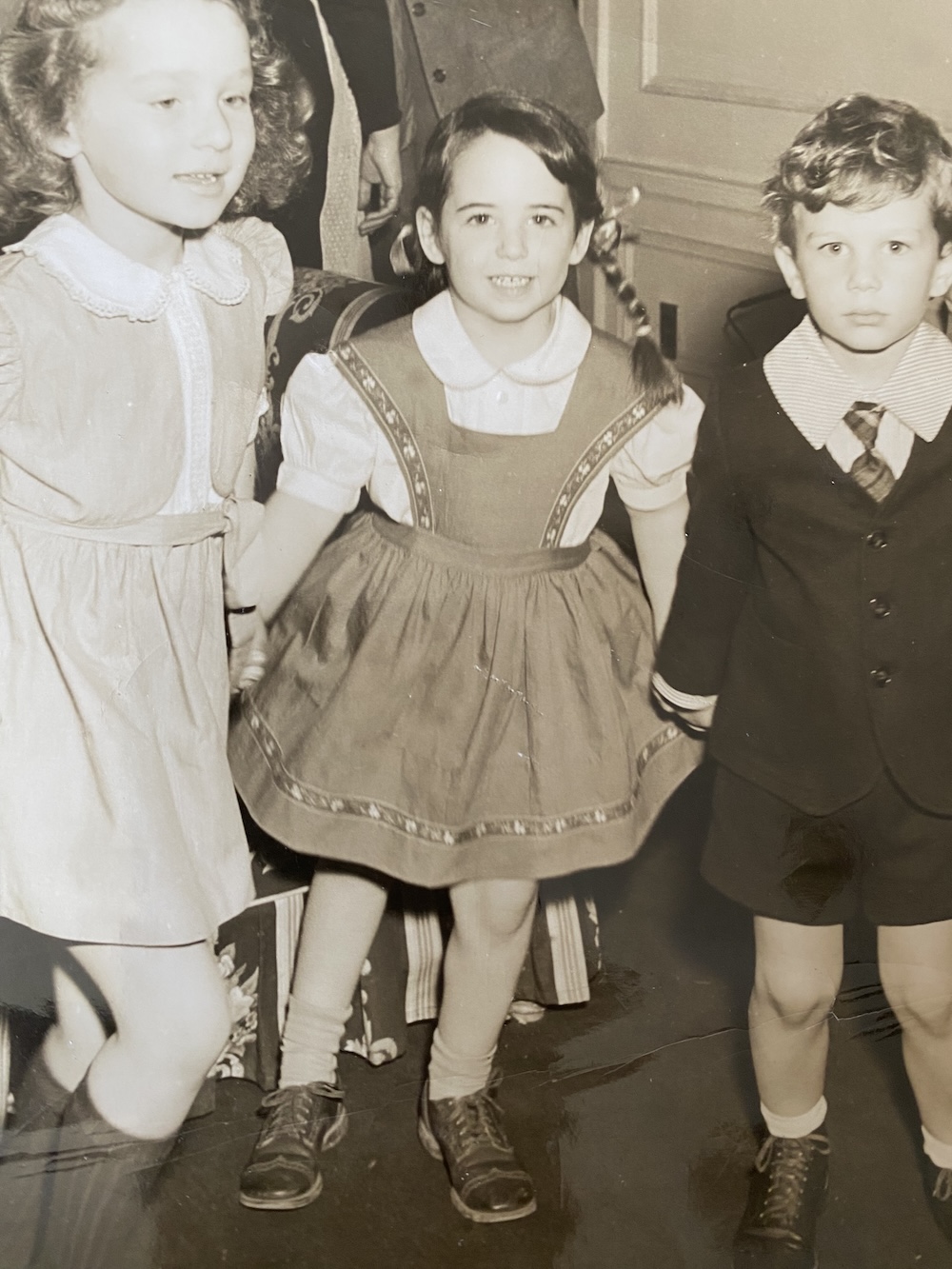
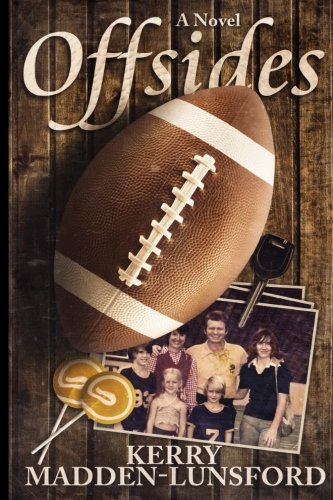
My new children’s novel, Werewolf Hamlet, is coming out into the world. It’s my most personal novel aside from Offsides, which came out, almost thirty years ago in 1996 and was a New York Public Library Pick for the Teen Age in 1997. My older kids were six and eight when Offsides was published, and I remember Doug Dutton of Dutton’s books in Brentwood kneeling down to help my son with his necktie. Flannery wanted to wear a tie to my signing at Dutton’s, and my husband was driving from his teaching job in South Central to meet us, so he couldn’t do it, and I couldn’t figure out how to do it on our rush to drive to the Westside in LA traffic from Silver Lake.
      I still don’t know how to tie a necktie, but I remember thinking – remember this – as I watched Doug kneeling and looping Flannery’s tie in a perfect knot.
     I remember Lucy saying, “Why don’t you sign me a book? Huh? You sign one to everyone else. I want my own book.”
     So, I signed her one, and she drew a self-portrait in the book.
     How was it all three decades ago? Time is slippery, the years piling up one after another. Now Lucy is married, a mother, and the executive director of a preschool with three branches in Chicago. We have a trans son, Bo, who was born two years after Offsides was published, and while I was pregnant in 1998, I received a letter saying Offsides was going out of print. I felt like such a giant, broke, and pregnant failure. I couldn’t even afford to buy copies of my novel about to be pulped. It was also the scorching summer Mark McGwire was hitting a gazillion homeruns, and Flannery looked at my calves while baseball blared and said with pride, “Mama, look! You have Mark McGwire calves. So cool!”
      Werewolf Hamlet is my ninth book, coming out with Charlesbridge Moves, Eileen Robinson’s new imprint for reluctant readers. I learned that Charlesbridge Publishing keeps books in print and for that I am grateful. I don’t have to strike it hot within three years before the book gets pulped. All my books, although well reviewed, went out of print due to lack of sales.
      But Werewolf Hamlet is a story I didn’t want to write. I didn’t want the story to be mine. I wanted a different version, and it began very differently when I wrote the first sentence in 2008. It was going to be a lark of a novel, a romp, and a way of capturing my children’s childhoods. I wrote it first as a diary, and then an editor warned me that Diary of a Wimpy Kid would kill it, so to write it as a traditional novel, because she loved the premise and the first draft. Then she left the publishing house, and it was inherited by a new editor, who didn’t love it. I rewrote it some more, and it was rejected by one and all in 2014, so that was that.
     In 2013, addiction came to our family. It was the monster at the door. It didn’t just knock. It barged in and took root - deep, ugly, gnarled roots. For the last twelve years, we have been on a journey with our son, who currently makes his home beneath a bypass in Silver Lake. In the beginning, when I protested to a counselor – “How can I have a kid who is an addict? I write books for kids! My son was my editor and inspiration for so many stories. So were my other kids.”
     Unimpressed, the counselor shrugged. “Write the book for the kids who need it.”
     I resisted for a while, but since nothing I was doing (trying to rescue-fix-save, etc.) was making one bit of difference in “helping” Flannery, I took an early version of Werewolf Hamlet, and I began to write all the things that scared me about the freight train of addiction, and I channeled it all into a ten-year-old, determined to save his big brother. I put a Post-it note on my desk that said, “It’s for kids!” to keep my saggy-sad-sack mom voice out of it.
     I found a brilliant editor, Karen Boss, who understood on a deep and intrinsic level what I was trying to do, and she helped me find the heart of the novel. I’m both delighted and terrified as we approach pub date. Instead of doing a traditional reading for the launch, I’ve asked two young actors to play the brothers in some of the “interlude” scenes that take place between each chapter called “Conversations with Liam in the Night.” I wrote these interludes when my dear friend, Jennifer Richard Jacobson, told me “There are no quiet moments in your novel.” She was right, so I decided to write dialogues between the brothers, ages ten and seventeen. I found these so effortless to write because I imagined these brothers talking to each other, arguing, insulting each other with the “Shakespearian Insulter” while the younger one, Augus Gettlefinger, tries to rescue-fix-save his beloved big brother, Liam, who is rapidly changing and sneaking in and out at night.
     Someone asked me what I hope kids take away from this book, and I hope that if they learn anything, it’s that they don’t have to save anybody today. They can still love and care for the person who is causing them pain, but they still get to live their own lives and find out what they love to do whether it’s putting on plays or making movies or playing baseball or painting or drawing. Werewolf Hamlet is the book I didn’t want to write, but it’s the book I needed to write, and maybe it will offer solace or comfort to a kid who trying to figure things out and make them laugh too. It’s my love letter to my children, whom I love so deeply, and to the city where we raised them, Los Angeles, where my heart will forever reside, even more so after the devastating fires.
     As a lonely and awkward child, I read tons of books to feel less alone, and I hope Werewolf Hamlet makes readers feel less alone in the world too.

The book is already getting great reviews and an award!
*BOOKLIST gave it a starred review and says that is is:
a story that is rich in wise insights, comical and emotionally wrenching moments in turn...

It has been awarded a JUNIOR GUILD LIBRARY SELECTION GOLD STANDARD, 2025
BRAVO!
Photo by Sonya Sones

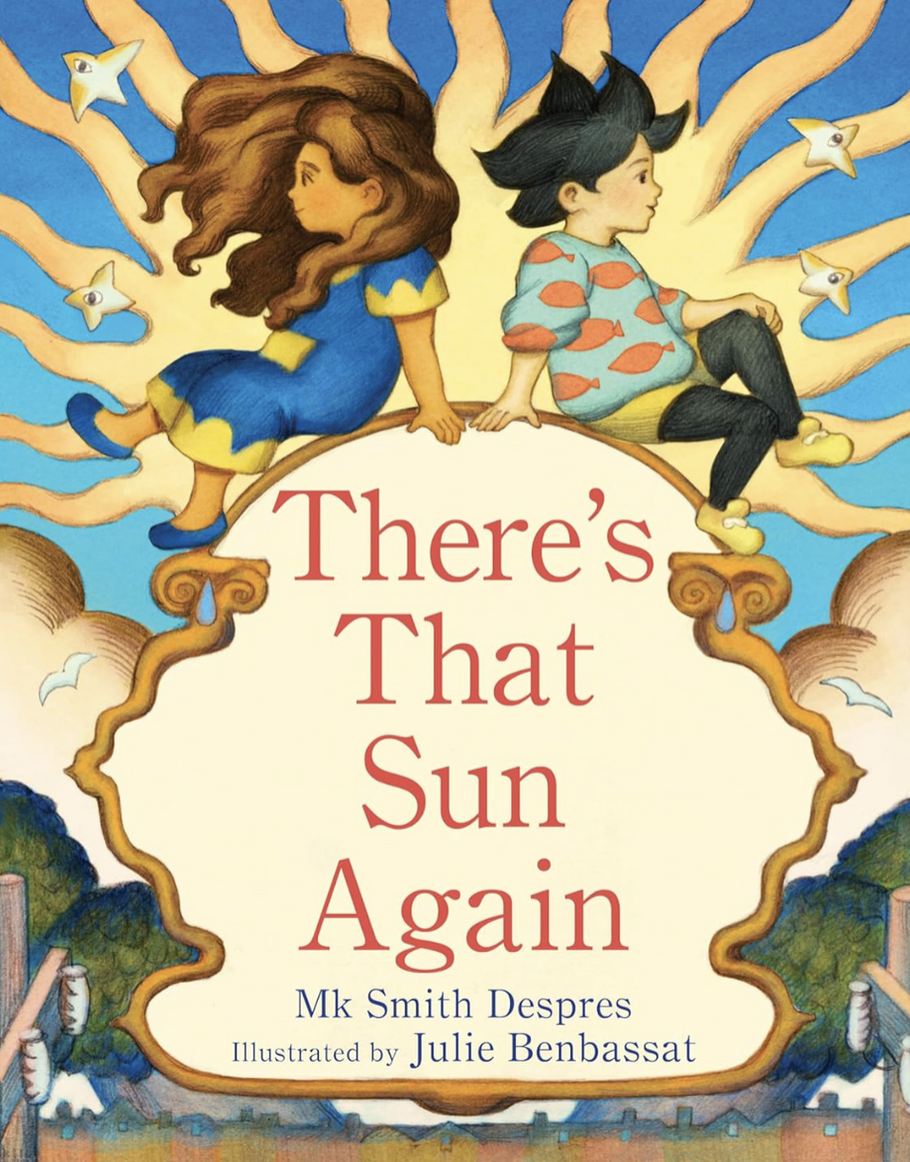
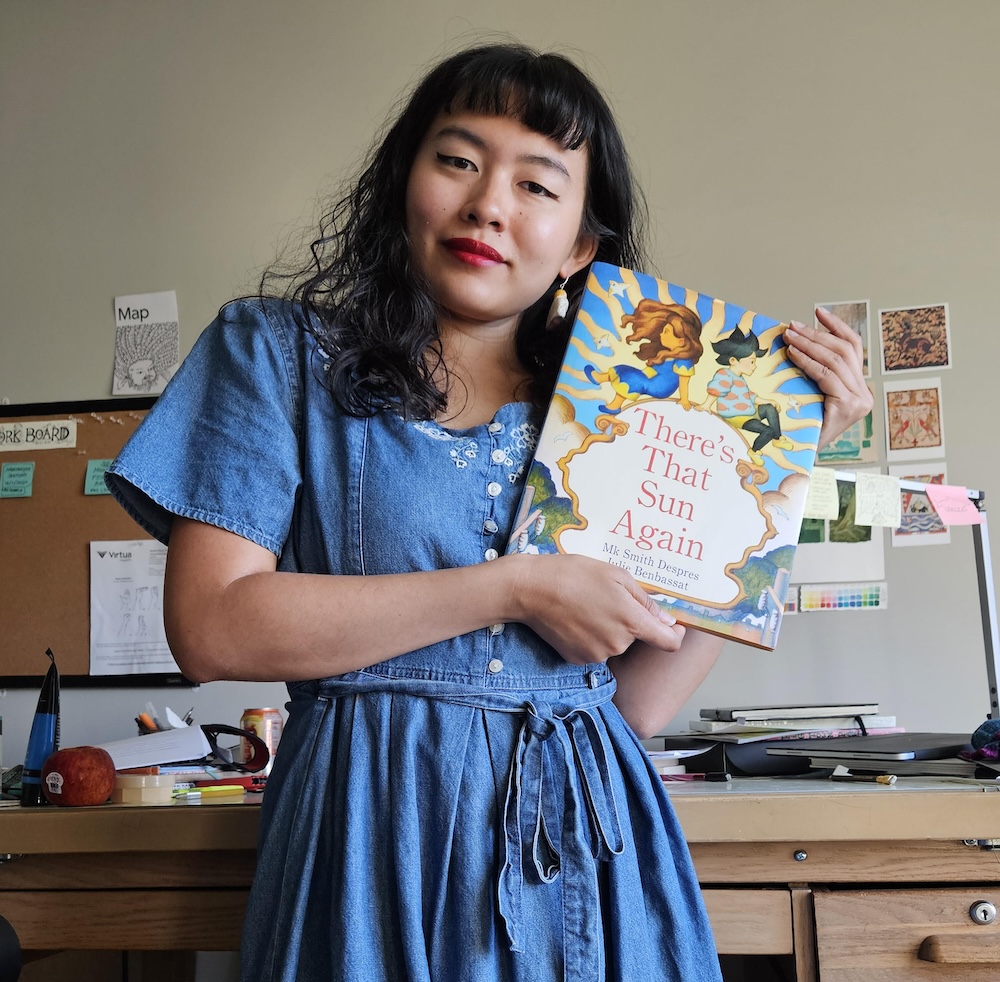
Julie Benbassat's THERE'S THAT SUN AGAIN

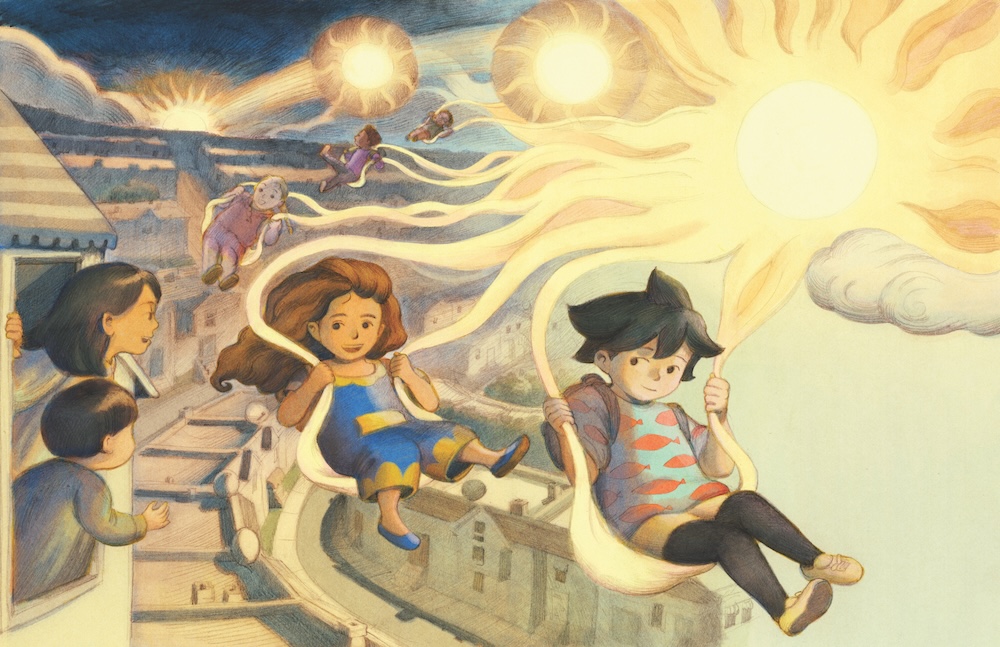
Our new Design professor at Hollins University is the incredibly talented Julie Benbassat. She's been taking off in the illustration world the last few years and we're lucky to have her inventive and imaginitive voice and talent in our program. Want proof? I talked to her about her most recent picture book, THERE'S THAT SUN AGAIN, written by Mk Smith Despres for Neal Porter Books.
e: Hi Julie! We've loved having you as part of our Hollins family!
What was your creative process/medium, can you walk us through it?

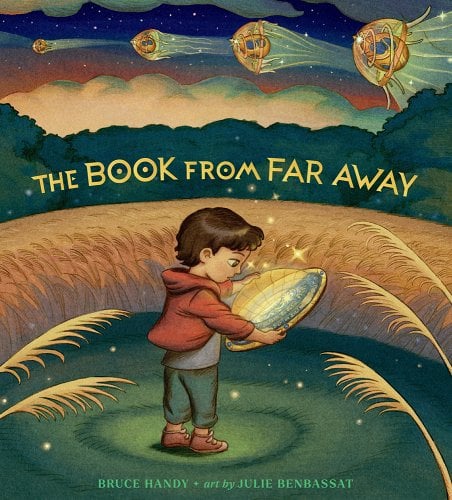
I knew I wanted to do something different for this book than what I did for THE BOOK FROM FAR AWAY,
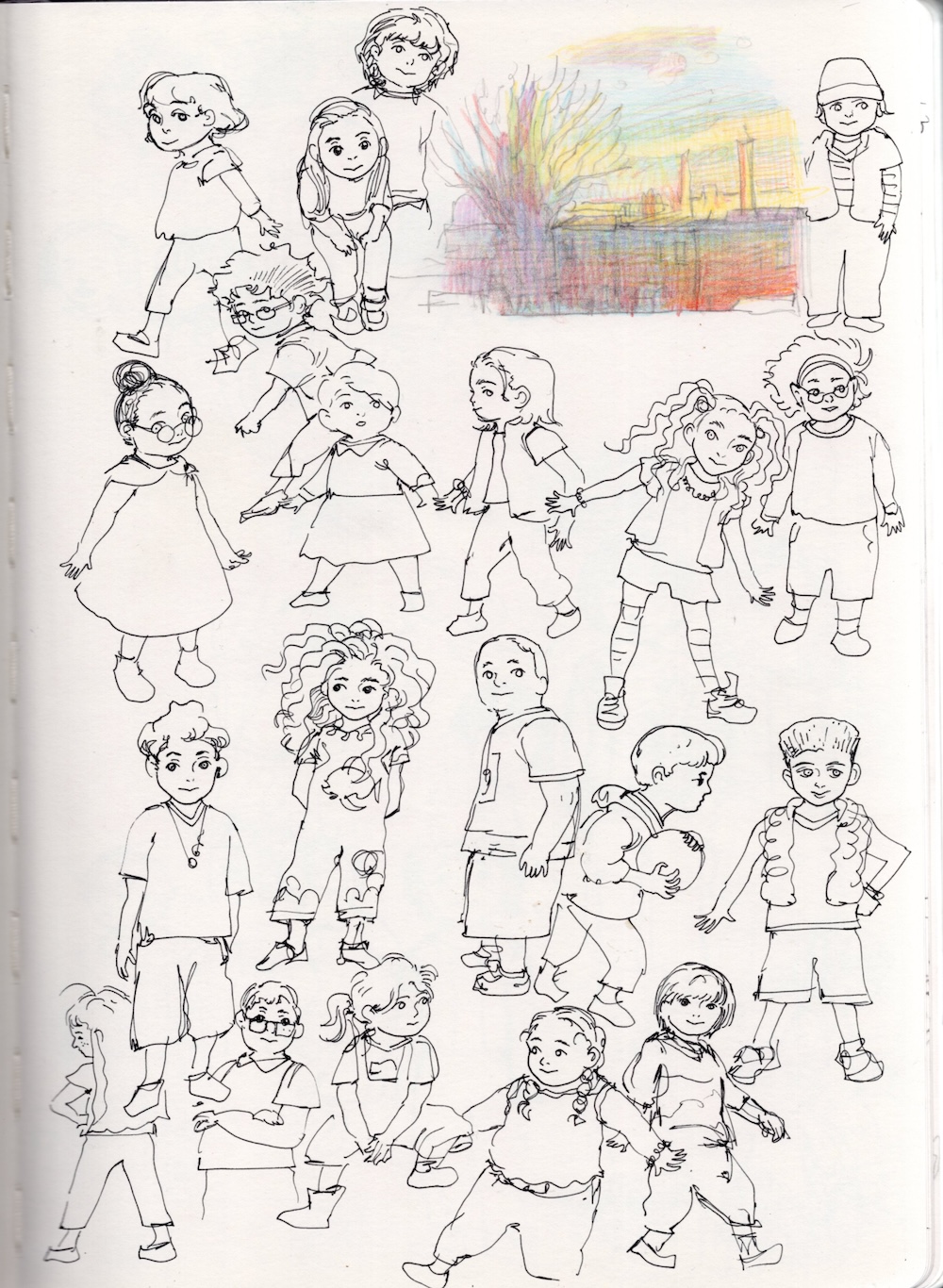
specifically in how I rendered the final art. I started off with sketching the child characters and my own Philly neighborhood I was living in at the time.
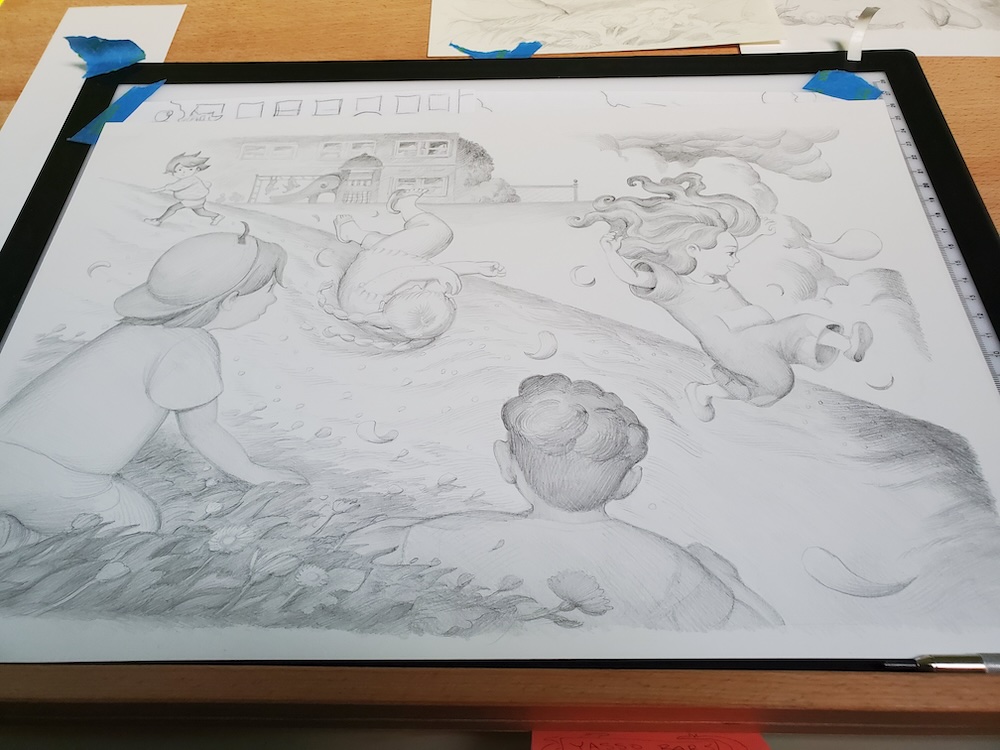
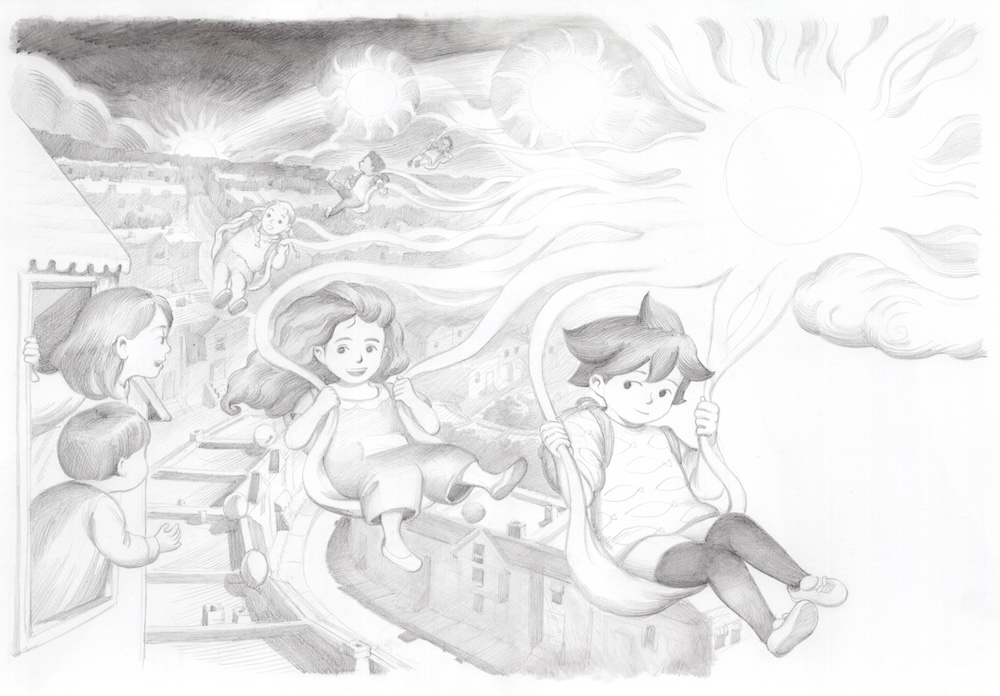
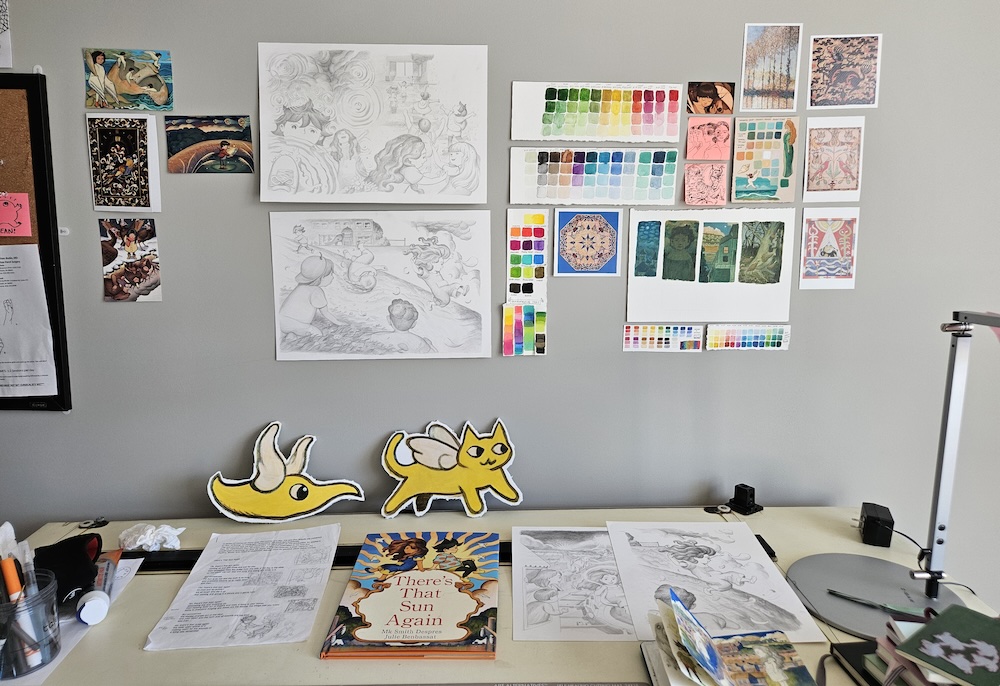
Mk’s poetry evoked images of a city landscape so I took in as much of my neighborhood as I could. With these sketches as well as some cute drawings from my very young cousins as inspiration, ideas began to form into whole compositions. I guess you can pinpoint my process as: Sketch, Thumbnails, More Sketches, Dummy Sketches, Linework, and then Color.
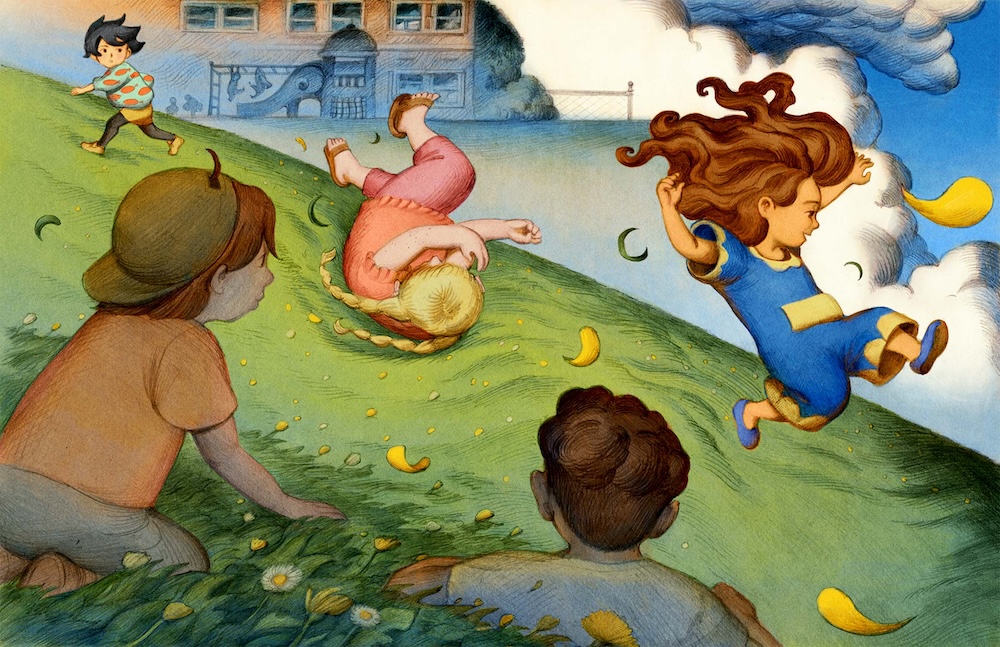
      For the final pieces, I used a mixture of traditional pencil line art and digital coloring in Procreate.
Mk’s poetry lent itself to this warm feeling that can only be expressed by the soft lines that graphite can give. I used a Kol-i-noor mechanical pencil specifically to get that buttery soft feel. It’s a drafting tool so it can get very fine details if sharpened while giving subtle shading gradients on its sides.
Procreate was used to color the piece with slight alterations in photoshop. I always try to restrict myself to as few layers as possible to maintain that sense of permanence that traditional media gives. I also made sure to start off each spread with a golden undertone to enhance that sun feeling. What can I say? I love the color yellow.
e: What was your path to publication?
I received the manuscript from my agent, Rebecca Sherman at Writers House, with a lovely note from the Holiday House editor, Taylor Norman, who said such wonderful things about my work and how this manuscript felt right in my hands. I immediately was in love with Mk’s writing style and honored by Taylors words, so I jumped on the chance to work on THERE'S THAT SUN AGAIN. We signed the contract and then went to working together in the next few months. It was such a pleasure to work with the whole Neal Porter books team, from Taylor’s expert input and Jennifer Browne’s page design instinct. They made the book just as special as Mk’s manuscript did.

e: Is there a unique or funny story behind the creation of this story?
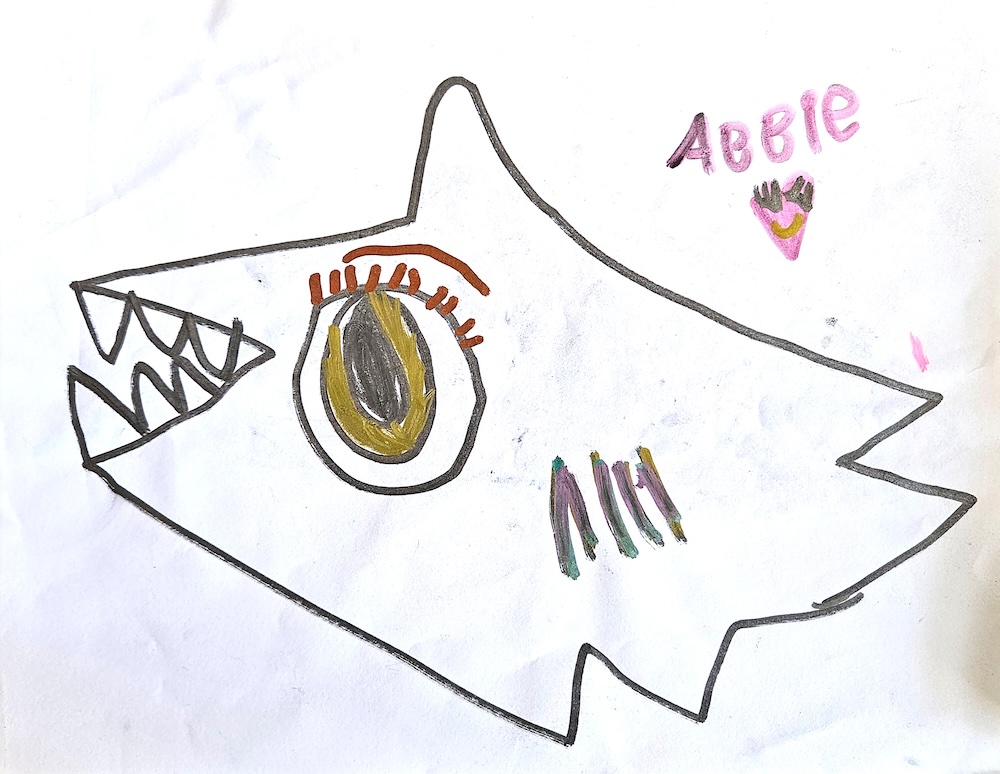
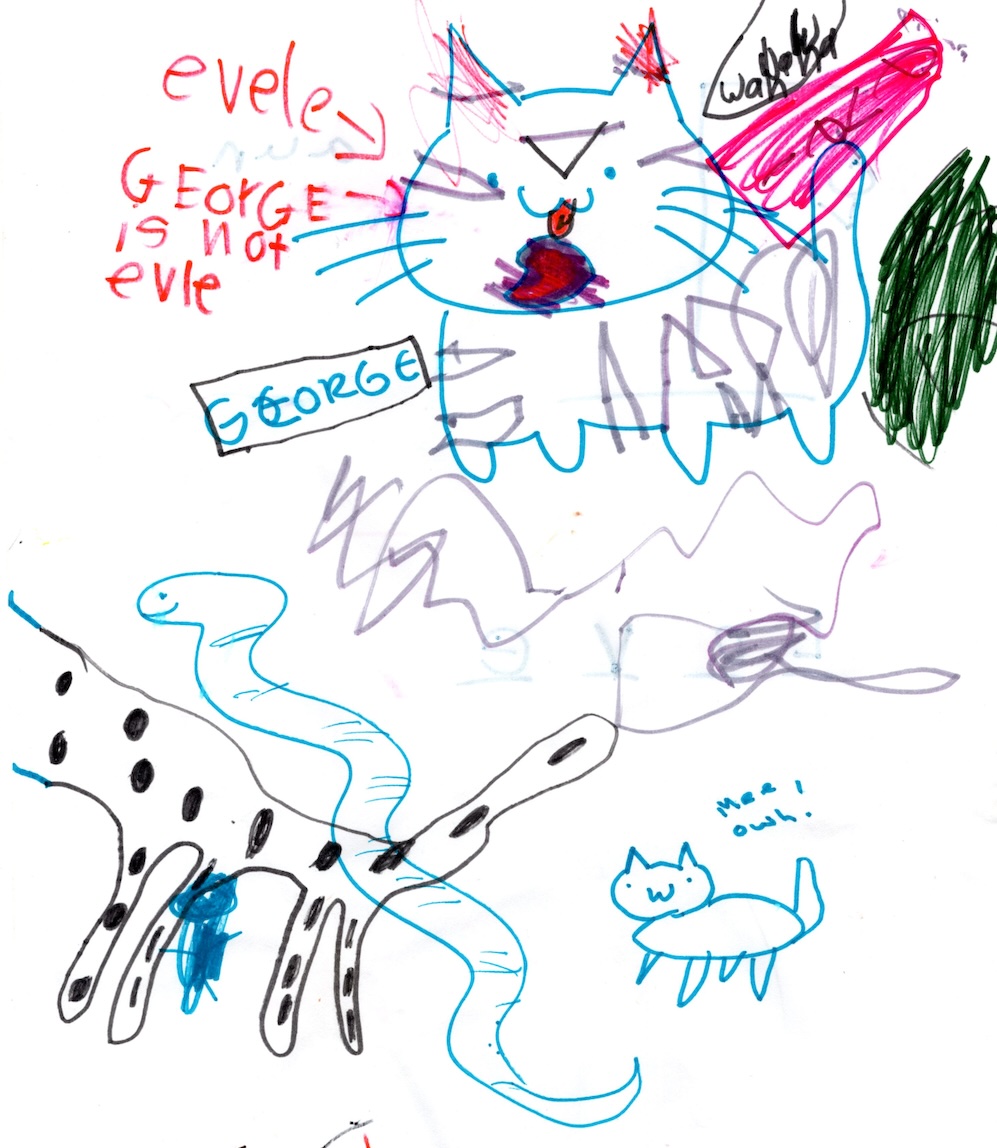
I didn’t personally write it so I can’t say anything to the creation of the manuscript per say but I did find a lot of inspiration from these animal drawings my cousins made. They range in ages from 5 to 12 and have such a joyous way of drawing I wanted to bring to the children’s drawings in the book. One of these drawings hangs in my studio right now just because of how much I love it.
e: What do you think makes an illustration magical, what I call "Heart Art” - the sort that makes a reader want to come back to look again and again? I’m looking for your definition of “Heart Art.”
Personally, illustrations that bring you into the world/ concept so seamlessly you forget about the law of art. I used to be so enthralled by artists who applied realism (I still am) but as I’ve gotten older I see effective artists as people developing their own way of visualizing the world and stories they want to tell. It’s the reason Ezra Jack Keat’s shape dominant works are just as evocative as the more rendered works of Jessie Willcox Smith. How does this person draw a bird versus the next, and how do we as humans still recognize them both as symbols for birds. That’s the power and beauty of illustrating stories. You are allowing for people to suspend their belief through the way you see the world and in turn inspire them to create their own.

e: How do you advertise yourself (or do you)?
A mixture of social media and reaching out in real life. The world of publishing is in a strange place, where you are the one oftentimes advertising your book more than the publisher. That has positives and negatives, but you have to try and make the best out of it. Many of my fellow illustrators have very little followers but put so much effort into reels, blog posts, and public outreach that it makes up for the lack of social media presence. I have a good number of Instagram followers, but I hardly see that translate to helping me sell books. I recently had a successful book launch for THERE'S THAT SUN AGAIN at my local bookstore, Children’s Book World, and most of it came down to reaching out to people I knew in the area and not social media. It’s a capricious aspect to the job but you get a hang of it eventually.
e: What is your favorite or most challenging part of being a creator?
My favorite part is getting to work on a range of projects that offer up so much variety in subject matter. One day I’m illustrating an editorial article about the mafia and then I’m illustrating a chapter book about a girl growing a tree on her head. (This is for an upcoming chapter book with Candlewick woohoo!) It keeps the job from getting monotonous and gives me a chance to learn something new.
      The most challenging aspect is trying to make work without feeling beholden to impossible expectations. I consider myself new-ish to publishing, as I worked as an editorial illustrator for most of my professional career before transitioning to books. In that time, I developed a toxic trait of never feeling like my work was good enough. (Editorial can be cut throat). This transition to books has made me open my eyes to how vast the art world is, and the idea of the “best art” doesn’t really exist in that way. I still have issues unpacking those high standards for myself but I’m working on it.

Is there something in particular about this story you hope readers will take away with them, perhaps something that isn’t immediately obvious?
I hope that readers, young and old, will read this book as it was intended to be: a poem. It’s not just a story of two children becoming friends over the course of a day, it’s also a story of sensations that children might feel in times of change (adults too). I’ve done a few readings of it out loud and the warmth of the words feels like soup for the soul. A gentle slam poetry to the heart that reminds you how much one can feel over the course of a day.

Lovely! e: What are you working on next or what would be your dream project?
I’m currently in between finishing that chapter book about a girl growing a tree on her head, doing final art for a book about a fox named Mungo and planning out dummy revisions for a book about an art collector turned suffragist. I am so grateful to have this range of work and am excited to see what 2025 has in store.
      My dream project is something that alternates from day to day but right now it would be working on a book on fairytales/ myths around the world. I love those old Rackham and Dillon illustrations and if I could do something like that, that would be so cool. Fairytales and mythology have guided children and adults alike through hard times and I think we need that more than ever right now.

e: Thank you, Julie! Can't wait to see more of your evocative work!

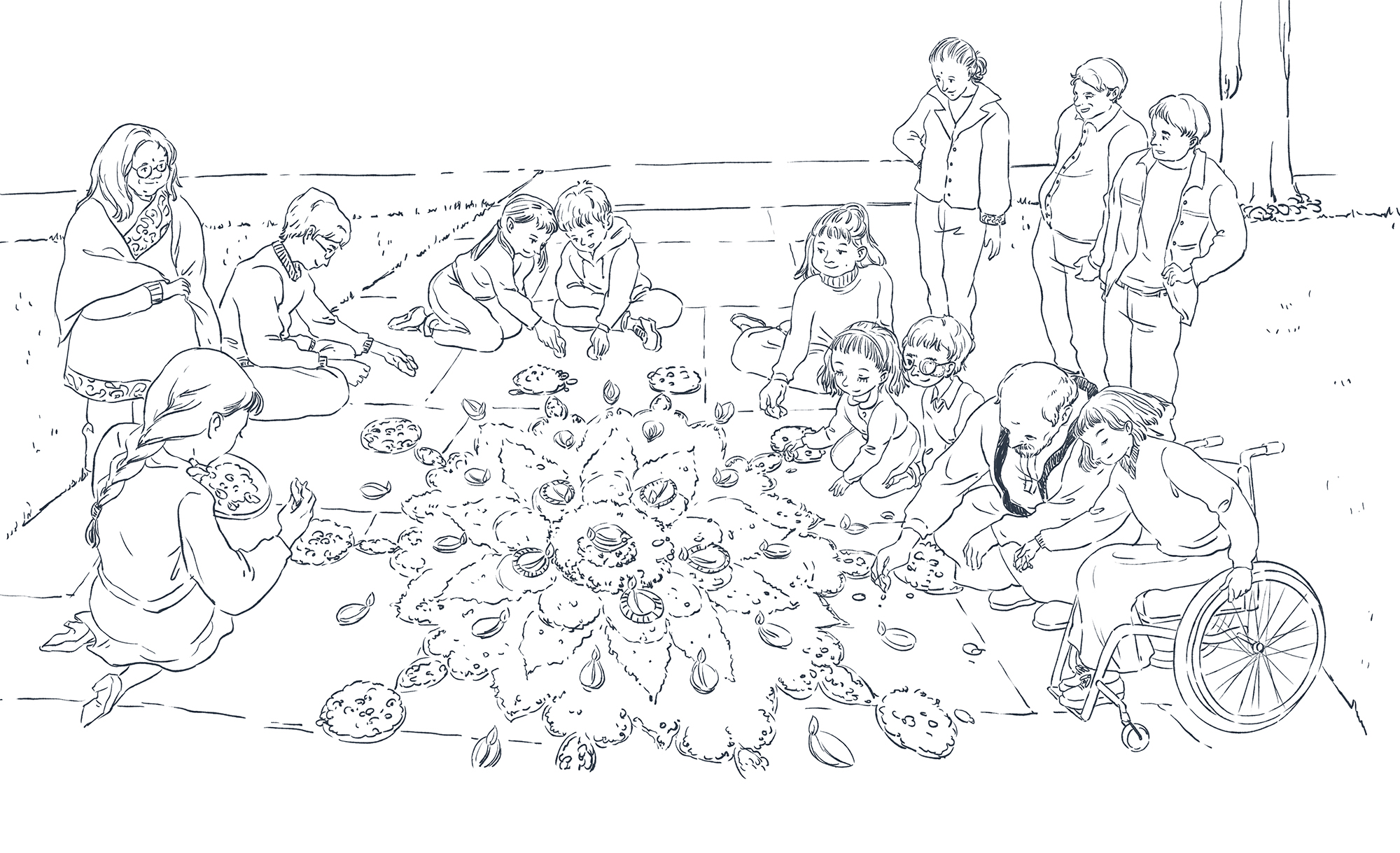
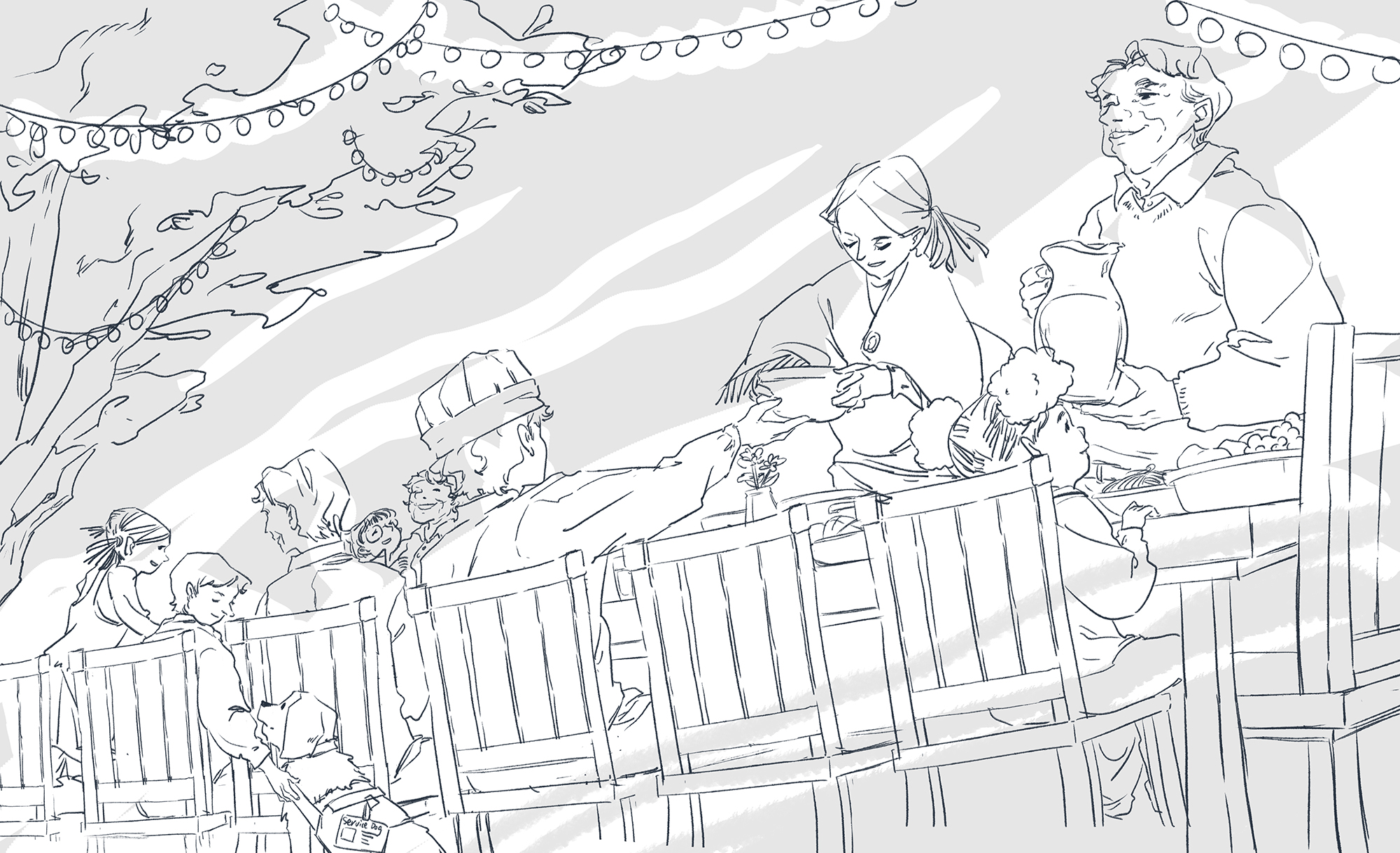
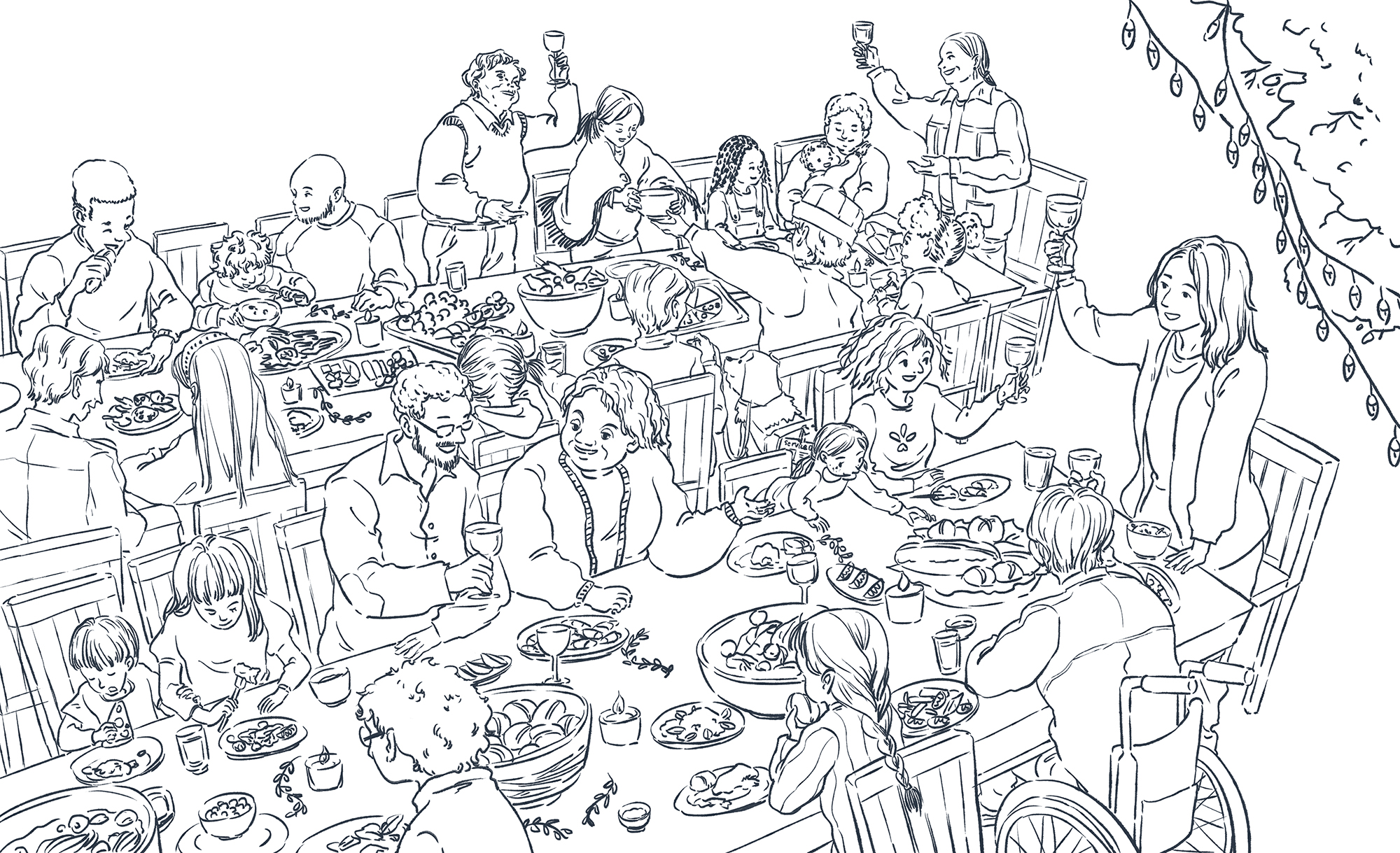
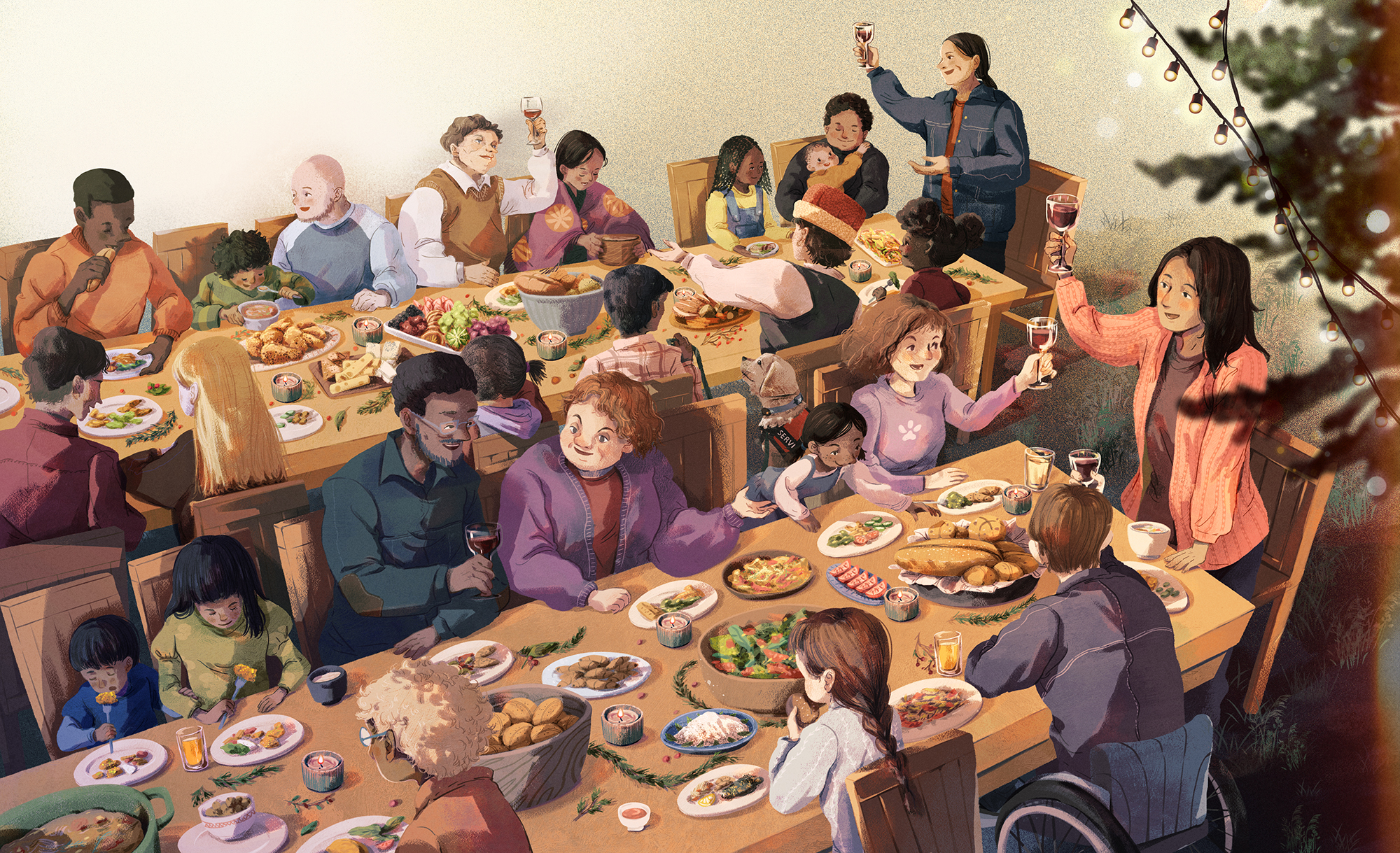
WE CELEBRATE THE LIGHT

I'm thrilled to introduce this lovely tribute to several cultural holidays in Jane Yolen and Heidi EY Stemple's new book, WE CELEBRATE THE LIGHT, illustrated by Jieting Chen! All three of them stopped by to talk about this special book! Take it away Jane, Heidi, and Jieting!

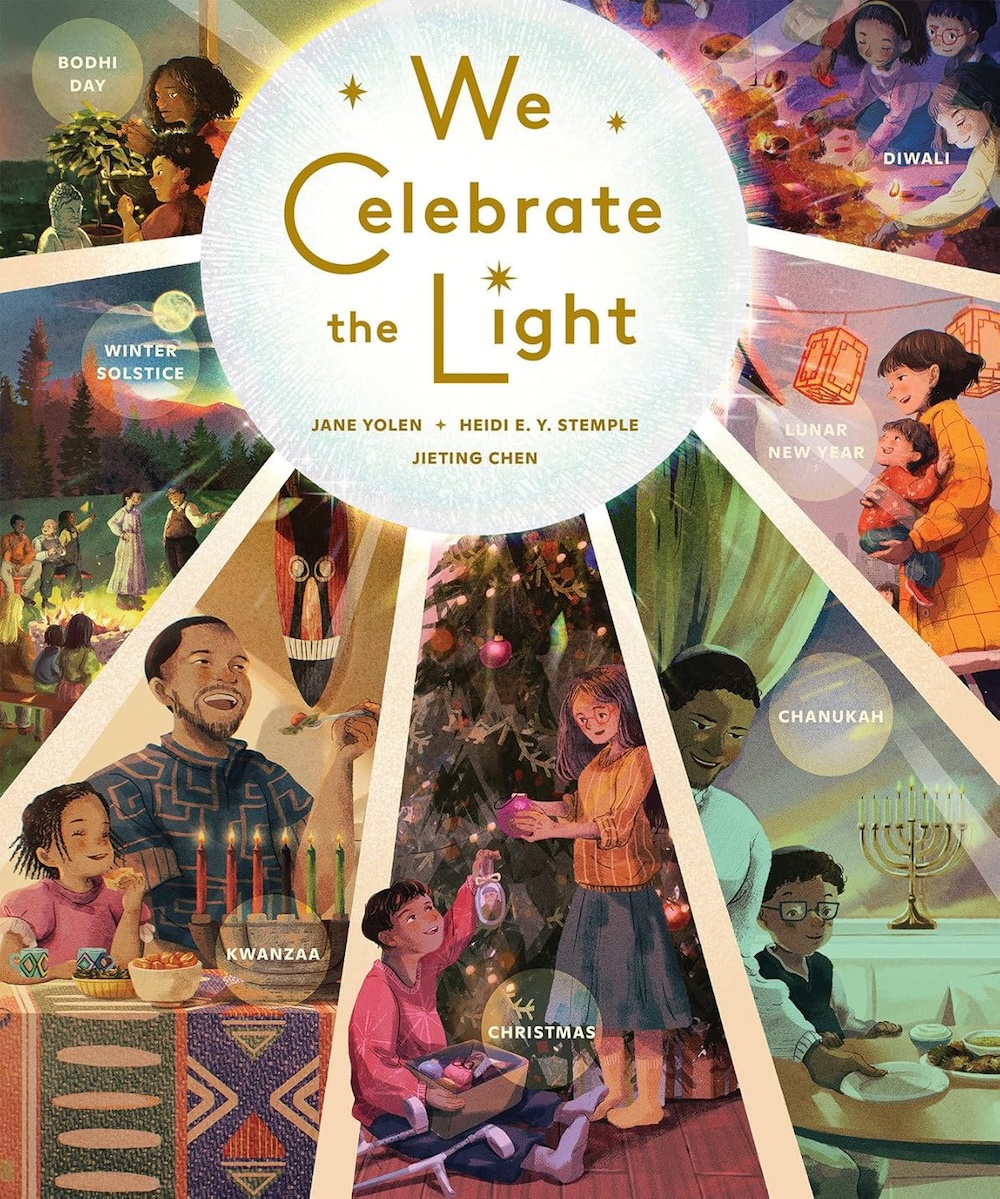
HEYS (Heidi): The three of us are so excited to be here on Dr. e’s blog to talk about our new book WE CELEBRATE THE LIGHT which just came out in time for the holidays represented: Diwali, Winter Solstice, Christmas, Chankah, Bodhi Day, and Lunar New Year.
     JY do you want to start by telling everyone how the book came into being? For those of you who don’t know, JY and I are mother and daughter and this book is our 25th together.

JY: This book began in an unusual way--because an editor asked us to write it. She is an editor that we have done this kind of book for before and it is right up our alley! What she did was give us the idea for the book and we did the research and the writing.

HEYS: That’s right. Cecily Keiser is the editor we worked with on the book I AM THE STORM and she called us to say, “Rise” (that’s her imprint) “needs a winter holiday book. We want it to represent many holidays and also be poetic.” That’s all we needed! So, we got to work.
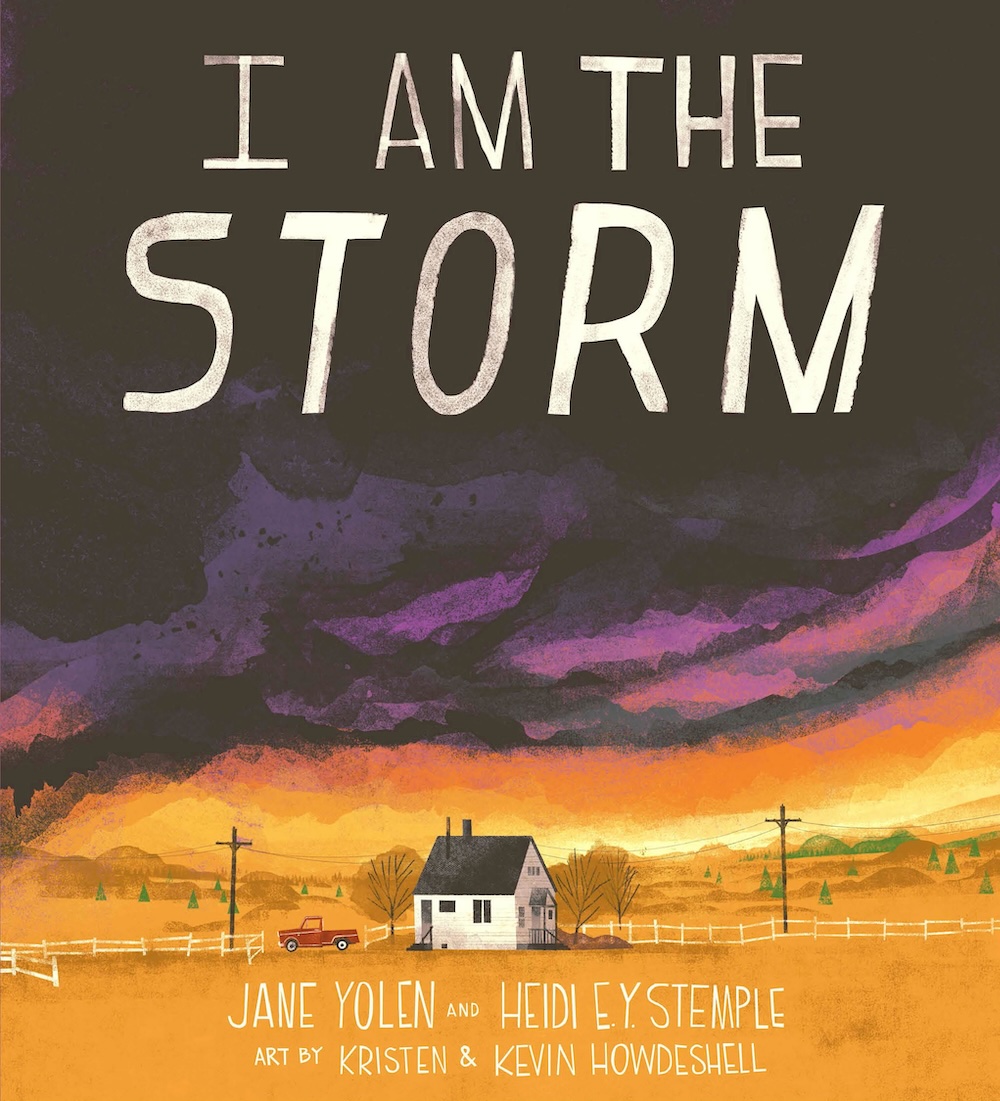
JY: The first book we wrote for her, I AM THE STORM, (illustrated by Kristen and Kevin Howdeshell) was about storms and empowering young readers to deal with scary things, but this one was all about joy since it’s about winter holidays, holy days, and special days.

HEYS: The text, itself, started out much more specific than it is in the final book. In fact, when we started, our first drafts really went into the particulars about what “light” and “traditions” and “family” (and the other threads) meant in each holiday. Like, for light, it began with “light to celebrate the oil lasting 8 days, light shining over a sleeping baby,” etc. But, once that was written, we decided that those specifics weren’t what the book needed. We wanted it to be about the larger themes that we, as humans, all share. So, the text shed a lot of those longer lines and kept the broader strokes. I believe this is what makes the book special.
That said, our process when we work together—regardless of where the idea came from-- often begins with an in-person brainstorming session. We talk (sometimes argue) about what the book should be about, what it should sound like, and what we want the reader to feel in the reading. Then, the writing is a bunch of back-and-forth emails. One of us starts and sends it on to the other and that person revises and adds and sends it back. Do we bicker? Yes. But, we love each other, so it’s ok. The book is always better for our strong opinions.

JY: The other thing we do is we sit down at my dining room table and we speak the lines of the book out loud because children’s books are meant to be read aloud. So, immediately, we can hear the spots that need work. If I don’t see those areas, Heidi will. And if Heidi doesn’t, I will, because the ear and the eye are different listeners.

HEYS: Once we felt the book was at a place to share it with Cecily, we let her in on the next phase of revision. Then we really start on the micro level—workshopping sentences, words, even punctuation. This type of attention to detail is more intense in picture books because, unlike longer-form writing, each word carries so much weight. One change, the whole tone or meaning can shift. I love this part of writing.
      This isn’t your first holiday book, JY. How was this book different? Besides working with me, of course.

JY: Three things—we knew the book was already sold which relaxes and relieves the process not having to worry about writing something that may possibly never get sold. This is a book an editor already wants. Second—it’s different in the fact that I didn’t even know of some of these holidays. So, as we were writing, we were discovering. In our family, we celebrate Christmas and Chanakah (which we call Christmakah or Hanakahmas) because our family is very mixed. So we come to this particular book about winter holidays with that openness in mind. We also have friends who celebrate very differently—our community is wide and not everyone celebrates the same holidays. Did this complicate our holidays? Sure. But, I think it actually opened them up to a greater and grander way. I hope this book shows that.

HEYS: It’s worth noting that even people who celebrate the same holidays don’t celebrate in the same way. That was a challenge in this book-- but it also gave us a lot of space to allow many families to see their own traditions in the pages.

JY: Something you may not know about my background is that I minored in college (Smith, 1960) in Religion. This meant, coming to this book (and, also the other holiday books I have written) I had already studied religions--some that many people may not have even heard of-- and I had always been interested in the commonalities as well as the differences.

HEYS: OK, so back to the book. Once the text was in place, Cecily started looking for an illustrator. She called to say the look they were thinking about could be summed up by the word “luminous.” That sounded right to us! Enter Jieting Chen. To say her art is luminous is an understatement.
      Jieting, can you tell us something about you? I understand you came to the US to study art as an adult. Tell us about your journey.

JC: Hi! I’m Jieting Chen, originally from China. I’ve loved drawing and anything to do with animation for as long as I can remember, so studying it in college just felt right. After that, I decided to head to the U.S. for grad school to dive even deeper into animation. It’s been such a fun journey, combining my passion for art and storytelling along the way!

HEYS: We were super excited when we found out they were approaching you to be the illustrator. What did you think of this project when it was proposed to you?

JC: I still remember the day I got the inquiry email from my agency. Alex—who’s such a lovely and wonderful person to work with, by the way, asked if I’d be interested in a special project. She explained it was a book about festivals and celebrations from different cultures, which sounded amazing. She did mention it was a bit of a rush, with sketches due in just a month, but I loved the concept right away and thought, “Challenge accepted!” And I’m so glad I took it on—it was such a blast to work on!

HEYS: Well, we are certainly excited that you took on the challenge!! Can you give us a glimpse into your creative process?

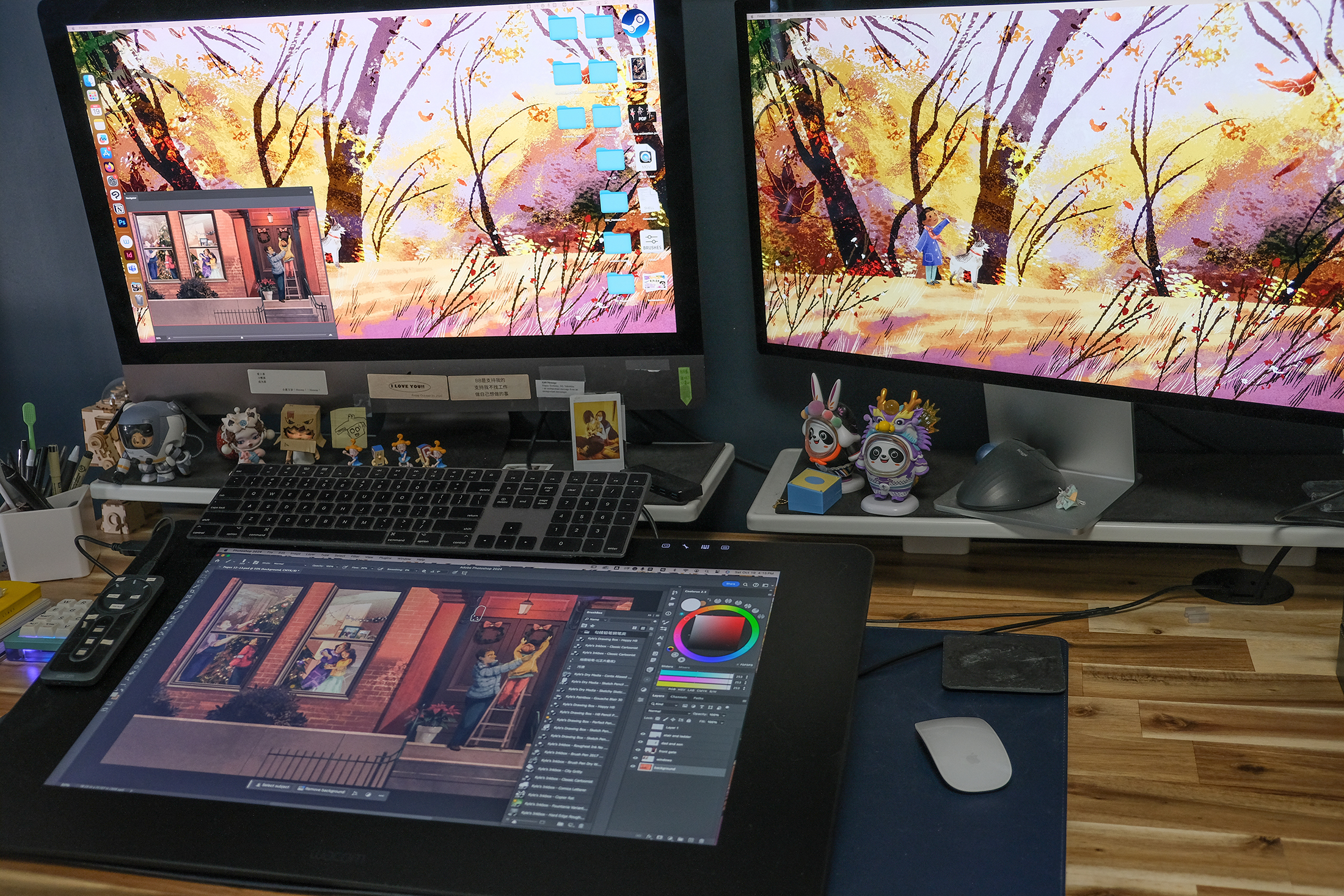
JC: I always start my work with research on the characters. I ask myself: Where do they come from? What’s their backstory? How can I best tell their story visually? But for this book, the process was a bit different since it’s packed with so many different cultures! So, I had to focus not just on the characters, but also on the settings—the environments they live in and the props they use to celebrate each holiday.
      Luckily, I work digitally, which made it easier to experiment with perspectives and layouts.
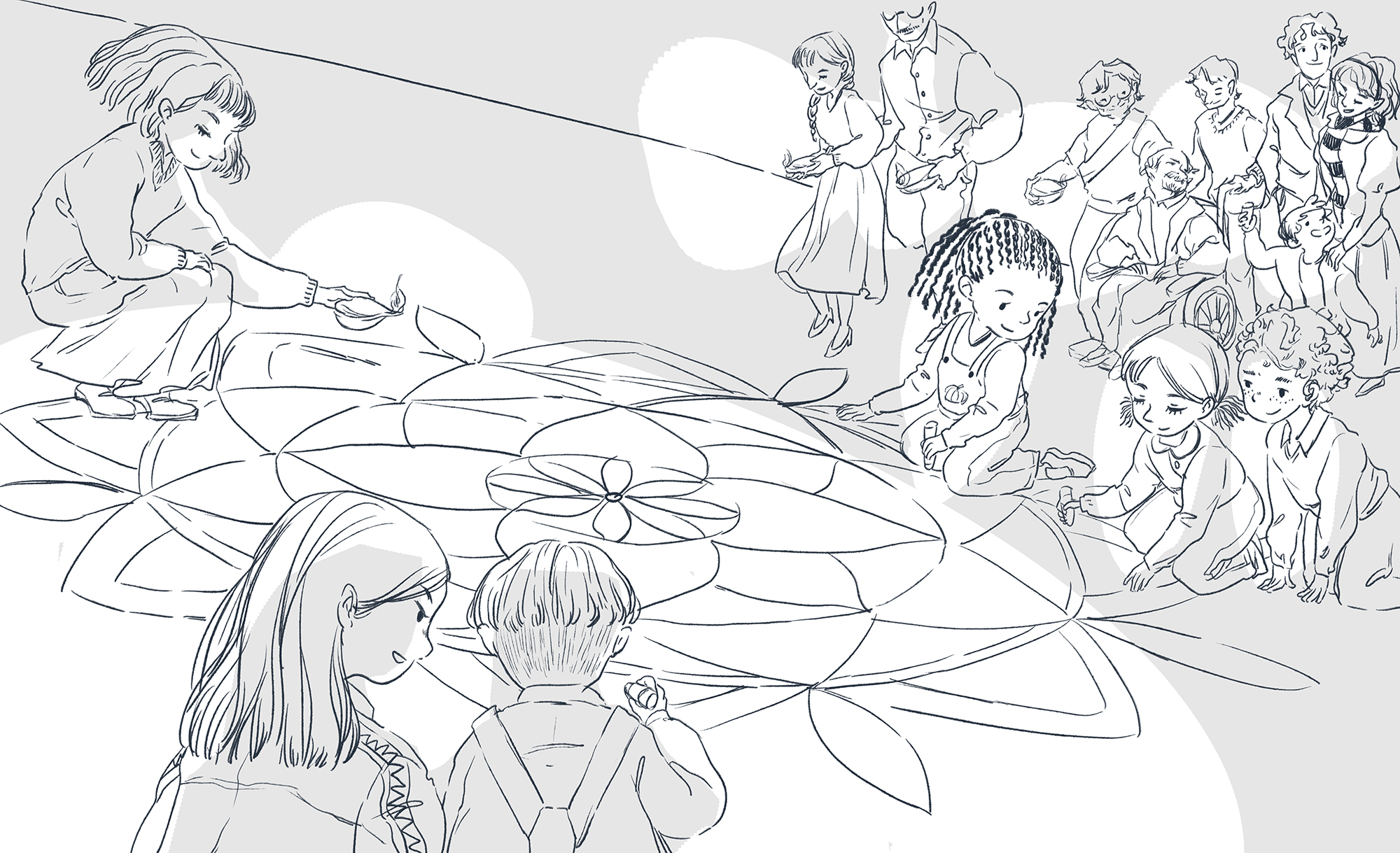
Once the sketches were finalized and approved,


I moved on to colors, which is always my favorite part!
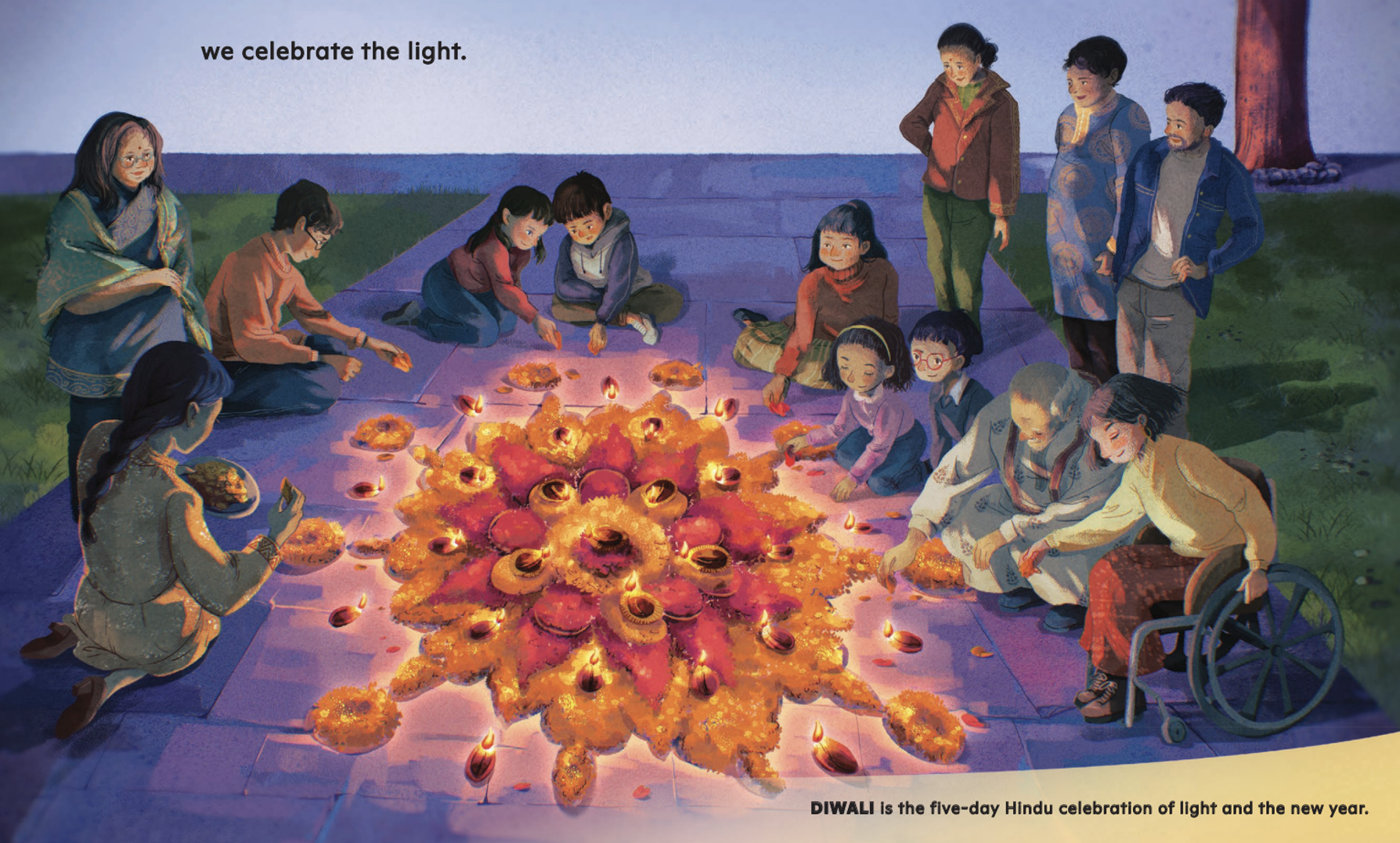


HEYS: Luminous! Your colors are luminous!
      We worked in a kind of weird way for this book. I sent you a scene description for each page. I believe, this was because of the tight deadline you mentioned—giving you a set scene was supposed to free you up to not have that extra step. I mean, it was certainly not anything I usually do. We writers try to stay out of the illustrator’s way. How was it to work this way? Were there any challenges?

JC: I wouldn’t call it weird, but it was definitely one of the most unique projects I’ve worked on. The book covers seven celebrations, each with its own distinct set of characters and settings. The scene descriptions I received were super detailed—they specified everything from whether the scene was indoors or outdoors, how many characters were involved, what they were wearing, and what each one was doing. But even with all that detail, I still had a lot of creative freedom to bring the scenes to life, which I really enjoyed!
      There were definitely some challenges, though. The hardest part for me was illustrating each scene as authentically as possible. I wanted to ensure I was being respectful to each culture, so I spent a lot of time researching traditional clothing, environments, and customs for each festival. There was quite a bit of back-and-forth with the designer and editors along the way, which I really appreciated. This was such a collaborative process, and everyone was working hard to go beyond their own perspectives and backgrounds to make this book the best it could be. I’m so proud of what we created together!

HEYS: We are so proud, too. But, without your art, it’s just a poem. Cecily got it exactly right when she chose you to do “luminous!”
OK here is an important question: Dr. e (Elizabeth Dulemba) whose blog we are guest writing always asks this: What do you think makes an illustration magical, what she calls "Heart Art” - the sort that makes a reader want to come back to look again and again?

JC: I believe “Heart Art,” or the kind of art that draws viewers in, takes a familiar scene and presents it in a way that feels both unique and slightly distant. It’s that sense of contradiction—something that feels both close yet far away, both precise yet abstract—that captivates viewers and makes them want to return to it again and again.

HEYS: I love that! When I am teaching writing, I talk about what make the reader want to revisit the book over and over again—and I think your art is that for this book. There is so much going on. So many details and so many places for the child readers and listeners to find themselves.
      JY can I ask you and then Jieting what is your favorite or challenging part of being a creator? For me, my favorite part is when I’m creating a story and the writing, the characters, the story, take over. I know, in reality, I am the one in charge, but there is always a moment when it feels like you are just following along. It feels so magical. Also, for someone like me, who is not an illustrator, seeing my story come alive with art… that, too, is magic.

JY: My favorite part is when I get an idea that I think can become something. My other favorite part is the ending, when I know it has become something.

JC: My favorite part of being a creator is having the opportunity to tell stories visually—whether it’s my own or a writer’s story that I get to interpret through my artistic lens. There’s something magical about translating words into images and creating a world that invites viewers in.
      At the same time, one of the biggest challenges is making sure my art resonates with the audience. It’s not just about creating something beautiful—it has to connect emotionally. I always ask myself, “How can I make this scene feel familiar, meaningful, or relevant to someone who sees it for the first time?” Striking that balance between personal expression and universal relatability is both the most exciting and demanding part of the creative process.

HEYS: Is there something in particular about this story you hope readers will take away with them, perhaps something that isn’t immediately obvious?

JY: That it is a book not only about the light and the holidays, but it is a book that is full of poetry, though maybe disguised.

JC: Since this book is all about celebrating light, I made a conscious effort to weave that concept into every illustration. I played with different elements like layout, character placement, light sources, and color schemes—to make each scene feel dynamic and alive. My goal was to create a sense of movement and freshness, so readers feel inspired as they flip through the pages. More than anything, I hope readers walk away with a sense of hope and positivity. Light can mean so many things—joy, warmth, connection—and I hope everyone who reads this book can find their own interpretation of light, both in the story and in their life.
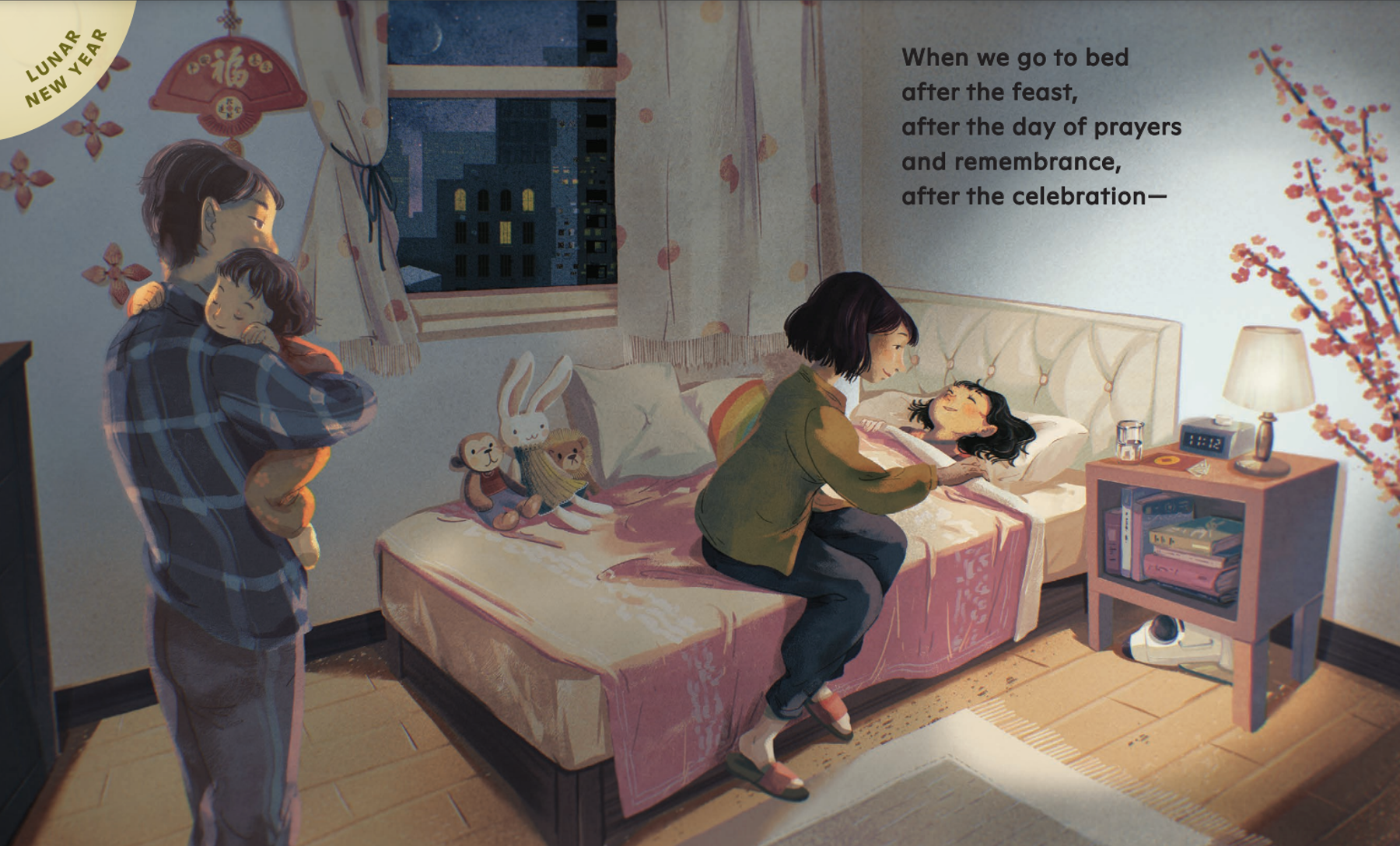
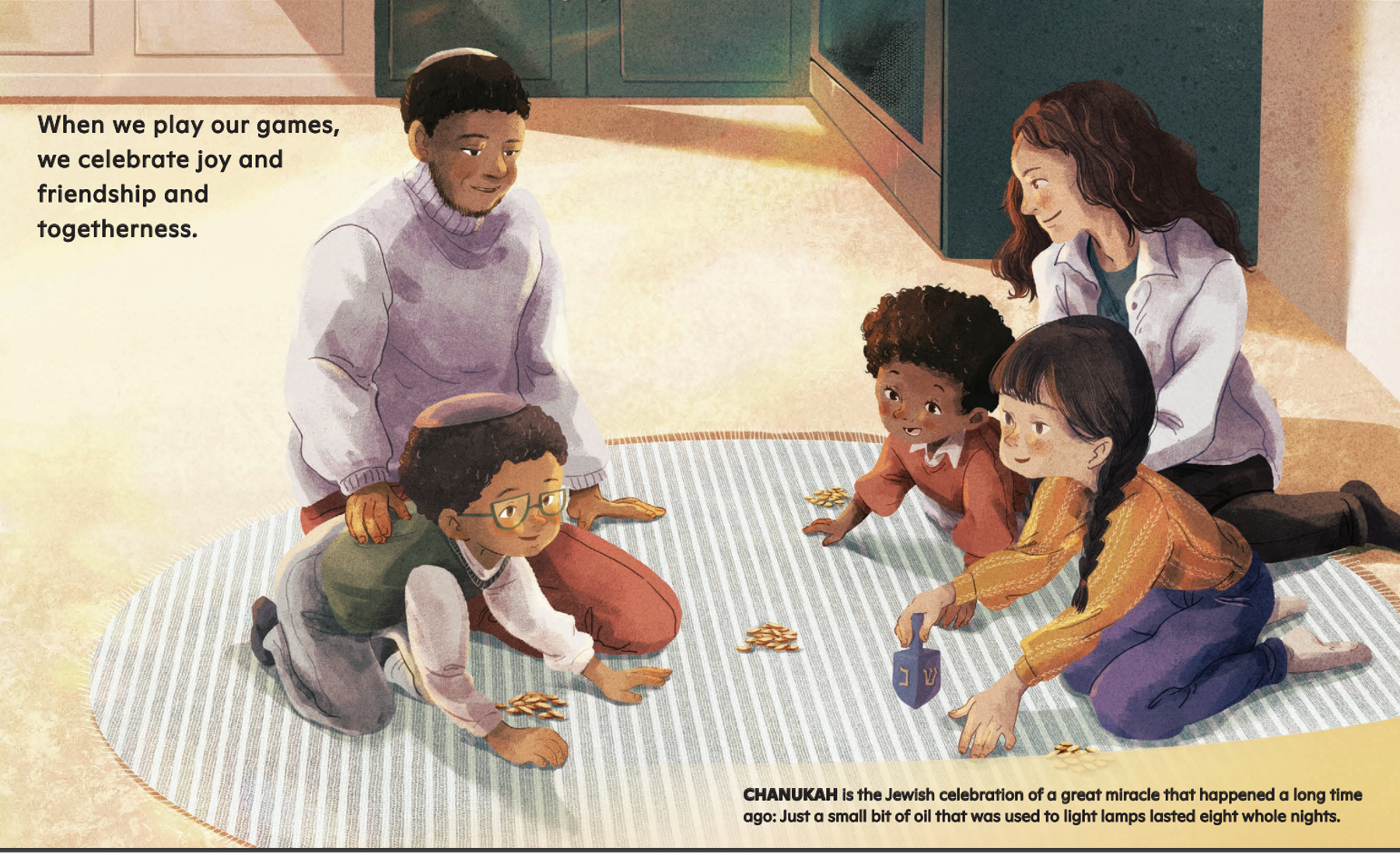
HEYS: Jieting, I am having so much fun pointing out all the light you have put into the pages—just in that very first scene, there is light pouring in from the window, twinkly lights, the light from the overhead fixture… it’s really like light is a character in the book. It has its own plotline!
      And my hope is that, in this very divided world, every child reader can see how similar we are—how connected we are.
      OK last question: What are you working on next or what would be your dream project?

JC: I’ve always wanted to create a book about “loss.” As we grow up, we have to say goodbye to so many things—places, people, moments—but I feel like we’re rarely taught how to navigate that experience. Learning to cope with loss, to accept it, and even appreciate it, is such an important part of life. This idea has been on my mind for a while, and though it’s still in the concept stage, I hope I can bring it to life on paper someday.

JY: I’m working on three new Dino books and a sequel to a picture book based on my mother’s family back in a shtetel in Europe. Heidi and I are working on a book of writing advice and I’m working with my husband on a poetry collection about grandfathers.

HEYS: I’ve just sent off the final revision for a verse novel called THE POETRY OF CAR MECHANICS that comes out next year. The project that is next is the 2nd and 3rd short middle grade novels in an eco-series about kids in a birding club called AVIAN ADVENTURERS. I love each new project.
      Before we sign off, is there anything else you'd like to tell us?

JY: I try to follow my own advice—Butt In Chair. Meaning I try to write something every day. As I get older, I am getting slower, but I can still manage a poem or two each day.

JC: I just want to take a moment to thank you for including me in this book. Working on it was such a joyful experience, and I learned so much about different celebrations throughout the illustration process. This project will always hold a special place in my heart, and I truly hope it brings warmth to the readers’ hearts as well!

HEYS: Oh Jieting! You made this book so so special! We celebrate you and your art! Now let’s all go put our Butts in our Chairs and create something new! And, not just the three of us—all you readers, too!
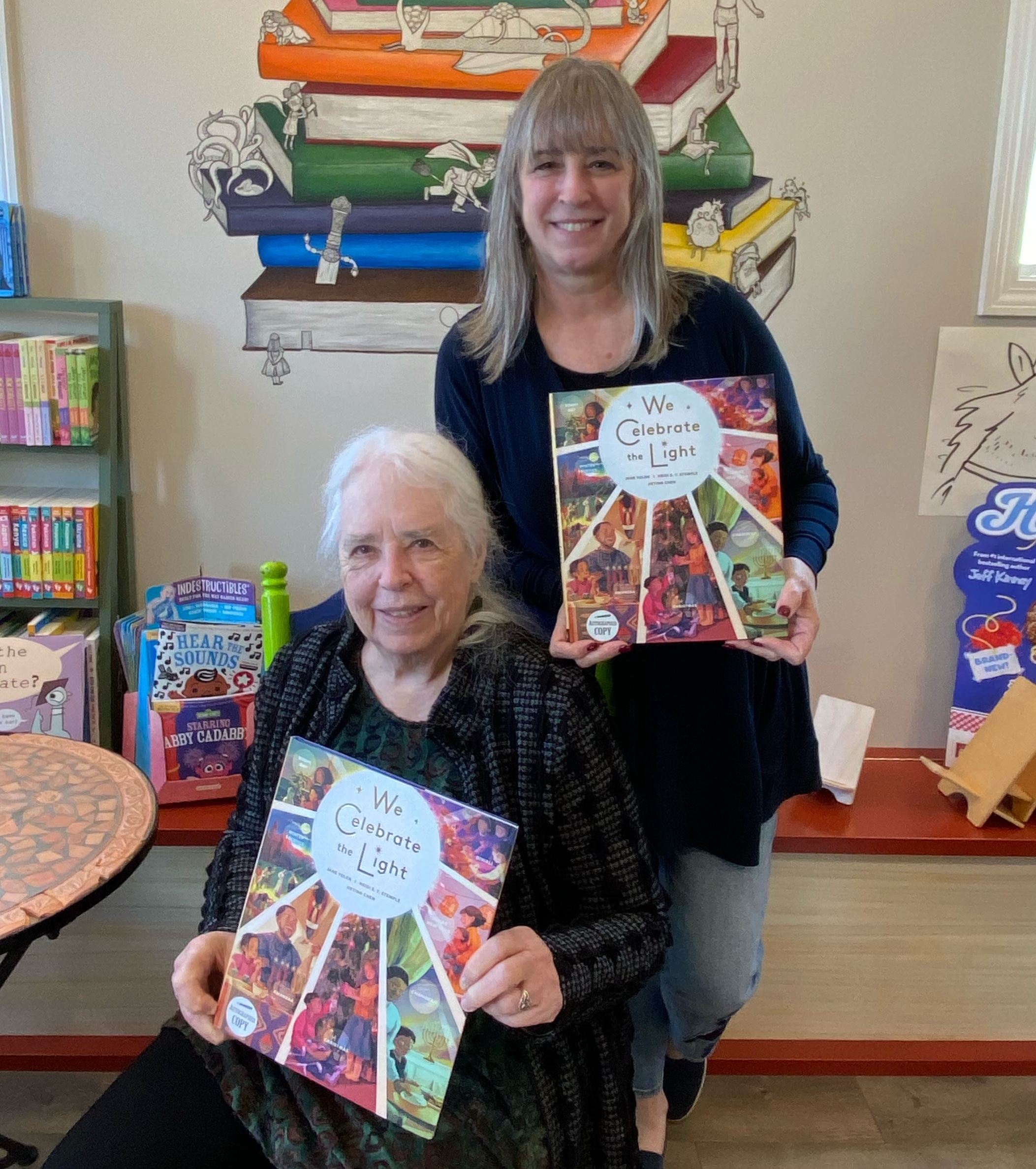
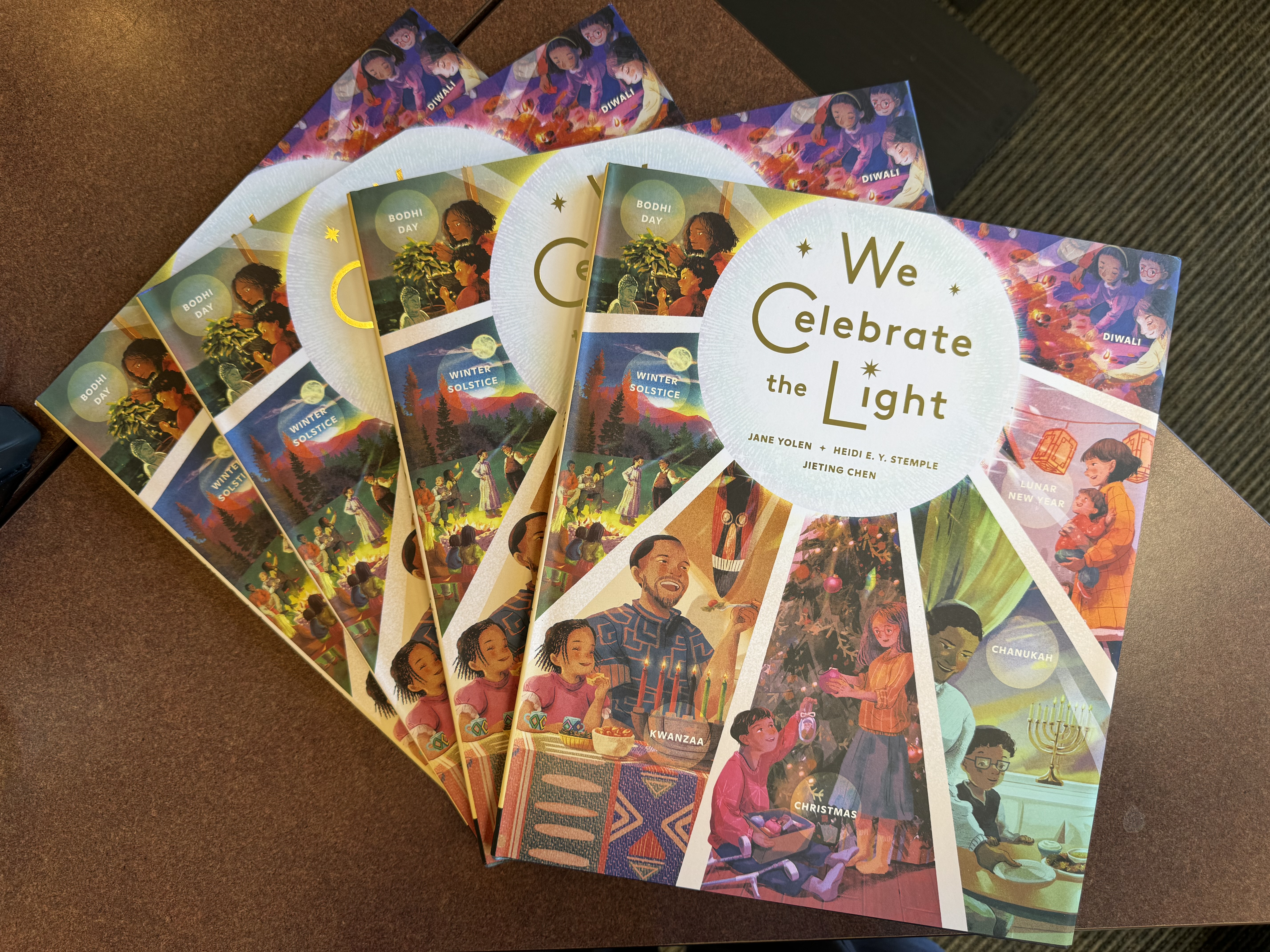
Since Heidi is one of our faculty members, you can also find the book in our Hollins bookshop at Bookshop.org.
You can find more about Jieting at: jietingchen.combr> On Instagram at @jietingchen_art.

Jane is at: janeyolen.com or on facebook as Jane Yolen and IG as @jyolen

Heidi is at: HeidiEYStemple.com on socials as Heidi Stemple, Heidi EY Stemple, and as Owl Count and everywhere else as @heidieys

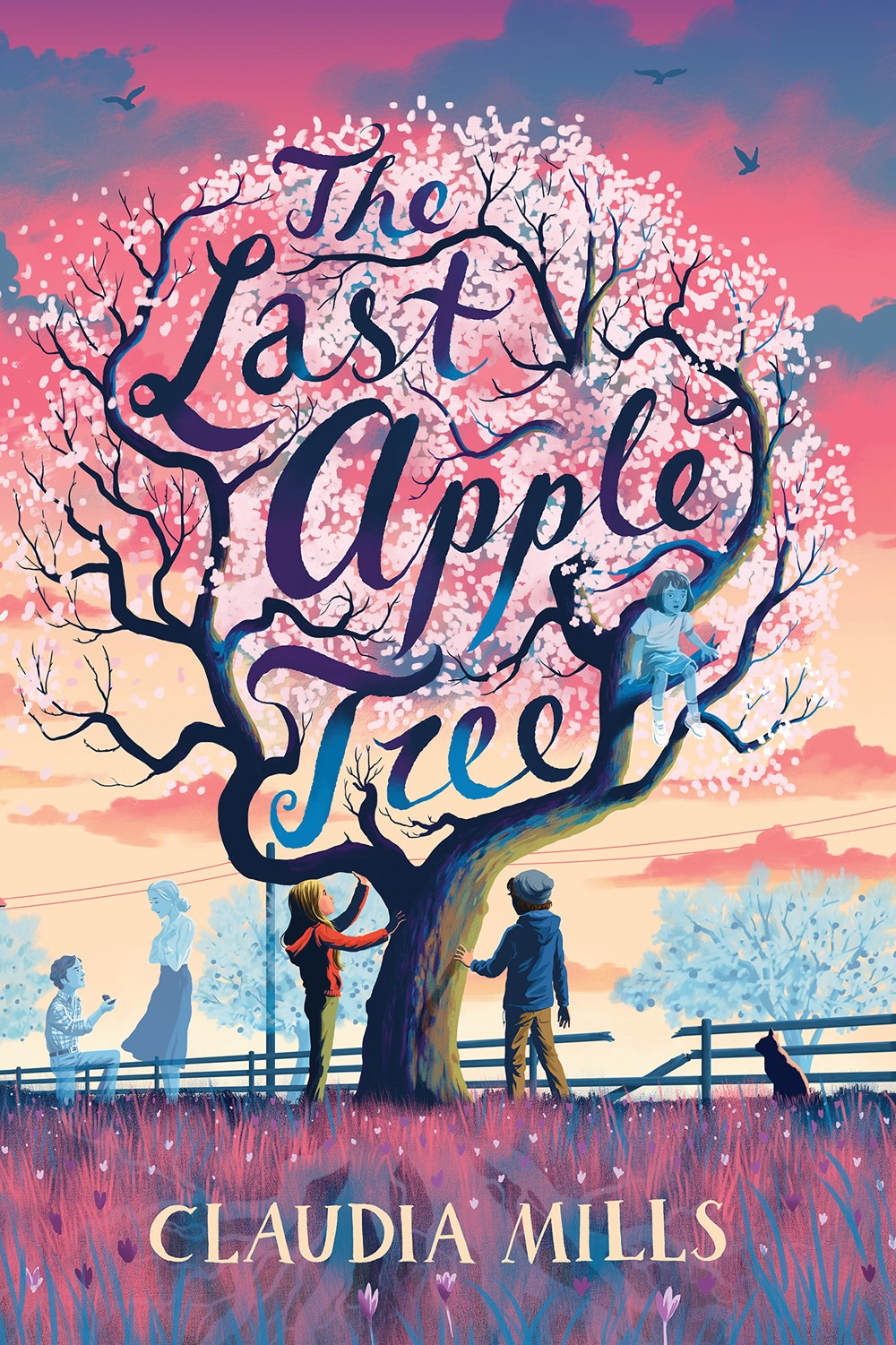
Claudia Mills' THE LAST APPLE TREE

One of my brilliant friends, Claudia Mills, has another wonderful book coming out on June 18th that deserves some love! I asked her to drop by to talk about it. Take it away, Claudia!
     A lot of newsletters come my way, and I mean to read them but somehow never get around to it, and months later they end up in the recycling bin. But a few years ago, I browsed through a newsletter from the University of Colorado at Boulder, where I taught in the philosophy department for twenty years, and one article caught my eye. Ecology professor Katharine Suding had created the Boulder Apple Tree Project, to preserve the county’s aging heirloom apple trees as well as memories of those who loved them.
      Hmm.
      I clipped the article and taped it in a notebook where I mean to keep ideas for possible books but somehow never get around to it, and if I do save them, never remember to do anything with them.
      But this article, clipped by happenstance, years later became the seed of The Last Apple Tree. The book stars an heirloom apple tree, lone survivor of a vanished orchard, and two seventh graders, a boy and a girl, who uncover its secrets while interviewing her grandfather for a school oral history project.
      Of course, in the process of groping toward the actual story, I had to come up with secrets for the tree, and tensions between the boy and the girl, and between the boy and his environmental activist father. I had to come up with a character arc for the girl, who wants to protect her widowed grandfather from losing himself in the griefs no one in her family is willing to talk about.
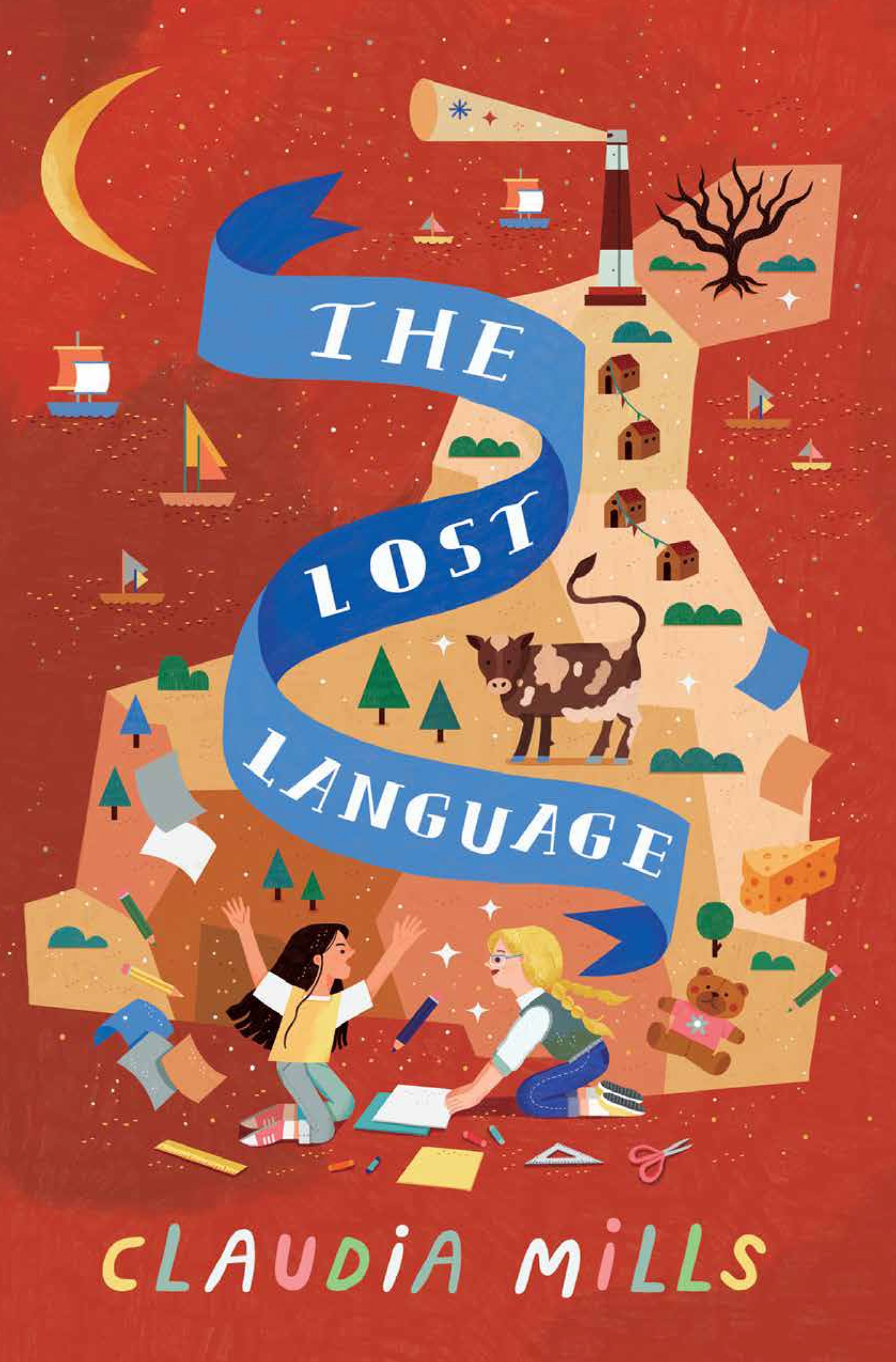
      There would be poems, I decided, from the point of view of the apple tree, scattered throughout the book. My previous book for young readers, The Lost Language, was my first novel in verse, and I found I adored that literary form. But I didn’t want to write two verse novels in a row. No, this book would have standard prose book chapters, alternating between the viewpoints of the boy and the girl. But poems from the tree would give me a chance to indulge my love of writing poetry and contribute a third viewpoint, the most important of all.
     Maybe I should read these newsletters more faithfully! Or at least occasionally. For who knows what tiny tidbit of an idea may emerge, that planted, and watered, and fertilized, and given slow time to grow, may find itself someday bearing the fruit of a published book.

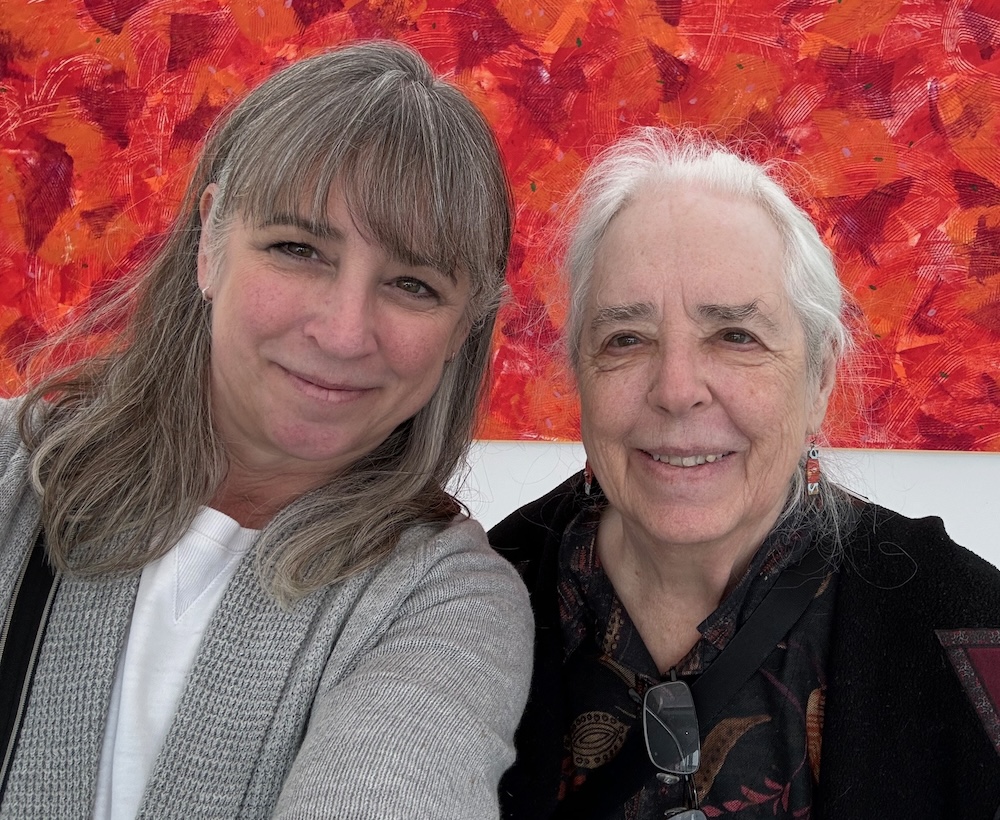
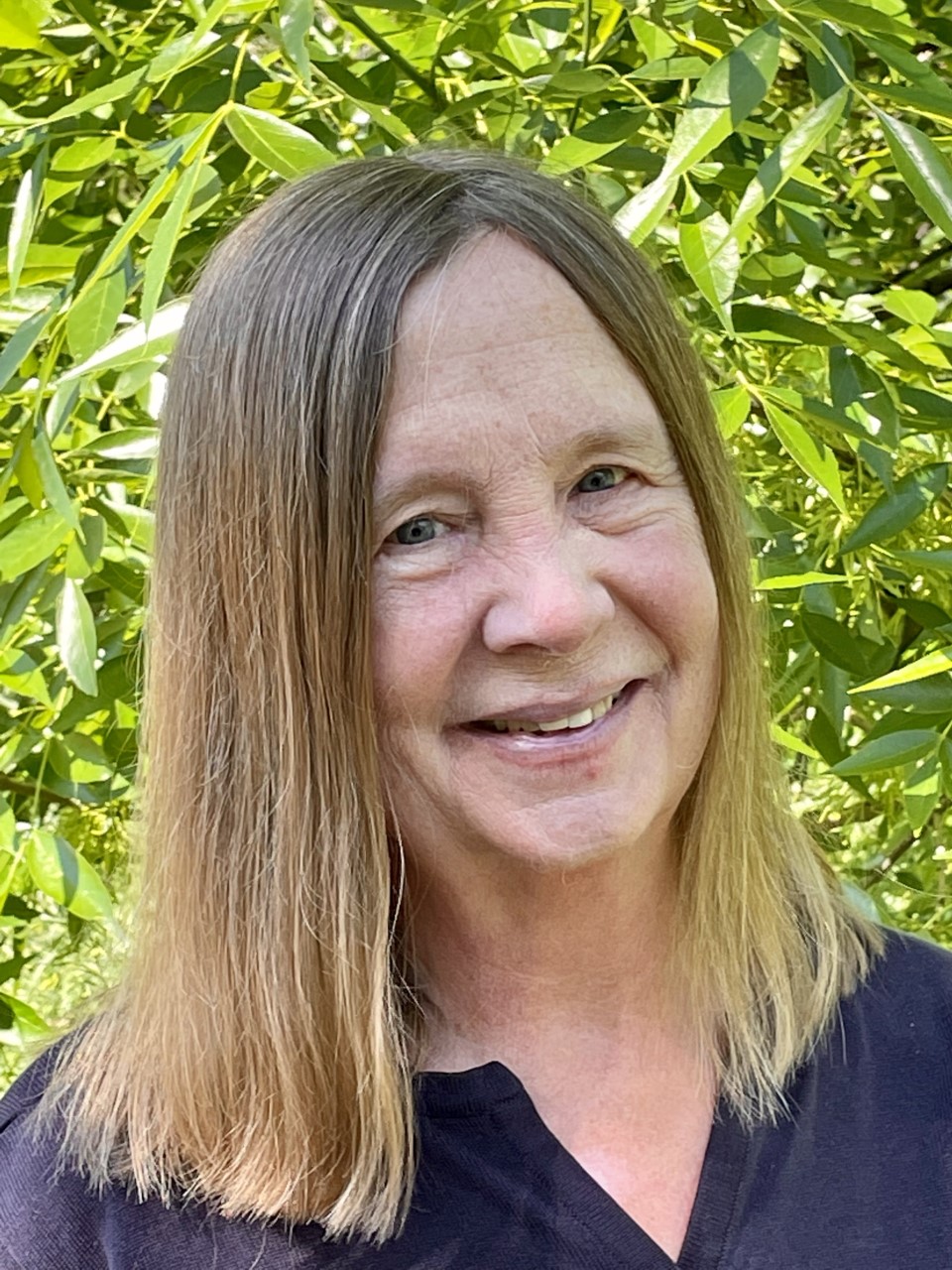
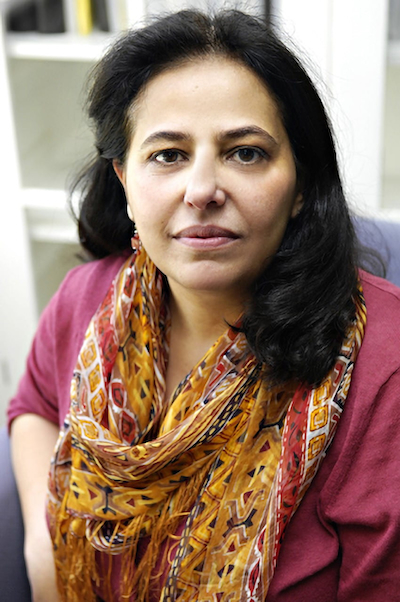
Here's a photo of Claudia and her favorite writing spot, where she writes for at least an hour a day!

THE MEASURE OF DISTANCE by Pauline Kaldas

Every now and then I like to feature books (and their creators) that are not for children - shocking! But I know so many talented writers, and Pauline is one of them. She is a colleague of mine at Hollins University, teaching in the English and Creative Writing programs, and I'm thrilled to be able to help her celebrate her newest title, The Measure of Distance. Take it away Pauline!
     When I set out to write The Measure of Distance, I only knew that it was going to be an immigrant novel and was going to focus on characters moving between Egypt and the U.S. The pivotal experience of my life occurred when I immigrated with my parents at the age of eight. As a writer, I am constantly investigating the immigrant experience and issues related to identity, language, and culture.
      At first, I thought that The Measure of Distance would focus on two generations, but as I started writing, the novel went further back in time and ended up covering four generations from the late 1800s to the 2011 Egyptian Revolution. I realized that to understand where we are, we often have to go back to the past and to those who came before us. The novel begins not with immigration but with migration from the villages of Egypt to the city of Cairo. My own great grandfather made a similar journey when he decided to leave his village of Abu Teeg and move to Cairo for better job opportunities.
      Each chapter of the novel focuses on one or two characters who decide to immigrate to the U.S. While there are multiple factors that influence their decision to leave their homeland, there is a historical/political event that motivates their immigration. Misha decides to leave because of the 1952 revolution that resulted in Egypt’s independence from the British, Hafez leaves because of the 1967 war, and so on. These events serve as a foundation for the characters’ movements, showing how the political intertwines with people’s individual lives.

The 2011 Egyptian Revolution in Tahrir Square

      I grew up speaking both Arabic and English, and language has always been important to me as a writer. When I write, I hear my Egyptian characters speaking to each other in Arabic and then I translate to English, attempting to capture the rhythm, syntax, and meaning of Arabic. In this novel, I wanted to create a visual distinction between the two languages. I decided to not capitalize when people are speaking in Arabic since the Arabic language does not use capitalization. In this way, I attempted to bring both languages to the pages of the novel.
      The novel culminates with the 2011 revolution and the fourth generation who must decide how they will respond to this event. There is Dunya whose father was the first to leave Egypt in the 1950s and never returned; there is Fathy whose father went to Egypt in the 1960s and chose to return, turning his back to America; and there is Yusef, whose father left Egypt in the 1960s to try to protect his son. The revolution pushes each of these characters to make a choice about their lives.

Pauline Kaldas is the author of The Measure of Distance, Looking Both Ways, The Time Between Places, Letters from Cairo, Egyptian Compass, and the textbook, Writing the Multicultural Experience. She is also the co-editor of Dinarzad’s Children: An Anthology of Contemporary Arab American Fiction and Beyond Memory: An Anthology of Contemporary Arab American Creative Nonfiction.