Showing posts sorted by relevance for query Sendak. Sort by date Show all posts

Winthrop Students at the Maurice Sendak Exhibit

Saturday, I headed to the Gaston (NC) Public Library with a small troupe of Winthrop U illustration students to see the Maurice Sendak Memorial Exhibit. We met up with members from the Carolinas chapter of SCBWI (the Society of Children's Book Writers and Illustrators). If you've been with me for a loooong time, you might recall when a Sendak exhibit visited Atlanta back in 2007. Librarian Dandria Bradley spent three years putting this show together and it paid off in spades!
The exhibit has been all over the world for many years, so it was the first time my students had seen it, let alone Sendak's work in person. They were enthralled!

It was so fascinating to see original works, like Max...
Final pencil drawings from We are all in the dumps with Jack and Guy...
I mean, look at that line work!
There were even pieces from The Nutshell Library...
(I had to purchase a set as the ones my sister and I had from childhood went to her.) I especially loved seeing an animation cell from In the Night Kitchen
, a sculpture of Max in his boat...,
and a study for the movie version of Where the Wild Things Are.
Of course, the stars were the actual images from the book Where the Wild Things Are (known in the kid lit world as WTWTA). To be able to see Sendak's crosshatching and watercolor work together was truly special.
We made sure to get a photo of the whole gang while we were there.
Only a few of us got to wear crowns (this is Shawnee and Izzy).
Afterwards, we all headed to Nellie's Southern Kitchen in Belmont, North Carolina, home to The Jonas Brothers - yes, those Jonas Brothers! The restaurant is the family business and all their gold records line the hallways. They also serve up a mighty fine chicken and waffles, so says Kaelen!
We tried to mix up the students and the SCBWI folks so that everyone could get to know each other. It turned out to be a fun and valuable experience for all! Thanks to Kelly Dyksterhouse, the new Carolinas SCBWI ARA for putting the day together and letting us Winthrop folks join in. What a wonderful day it was!

Southern Breeze to the Maurice Sendak Show!


     Sunday, a group of writers and illustrators from the SCBWI Southern Breeze gathered at the William Breman Jewish Heritage Museum to see the Maurice Sendak exhibit.
     Wow. I already admired Mr. Sendak's work immensely, but I had no idea the history and depth in his art.
     Being a first generation Polish immigrant (like my hubbie's grandparents) during the depression and WWII, Sendak had a difficult childhood. Rather than fluff his work up into a fantasy world of lovely, skinny mothers serving pink frosted cupcakes, he told stories using what was familiar to him, children wise beyond their years, frustrated parents, and scary relatives who didn't speak English. Childhood was a terrifying place, and he introduced an escape, a way to deal with harsh realities.
     Perhaps that's what makes his work so memorable. His stories emit an honesty, sometimes a tough honesty, which modern stories often avoid. Heck, he was the first to do it in his day too.
     It was a wonderful exhibit if you can make it by, and we all reverted to our inner six-year-olds when faced with a giant bowl of chicken and rice soup!

R.I.P. Maurice Sendak


The New York Times did a lovely tribute: "Maurice Sendak, Author of Splendid Nightmares, Dies at 83."

Also, there was a cool tribute site to Maurice's work created about a year or two ago called "Terrible Yellow Eyes." It's Sendak-inspired work by other artists and is very groovy.

Maurice Sendak on Steven Colbert

OMG. Steven Colbert recently did a two-part interview with Maurice Sendak - the creator of WHERE THE WILD THINGS ARE, many other classic picture books, and his latest BUMBLE-ARDY. Maurice has a reputation for being rather crotchety and he's had a rough time as he's gotten older, recently losing his life partner. So, to see him in this lighter moment is SO wonderful. But be warned - this is not for kids! Bravo to Steven!


To see the interviews in their original format at Colbert Nation go to Part 1 and Part 2, respectively.

Maurice Sendak

This illustrated tribute to Maurice Sendak in one of his last interviews with Terry Gross is worth your time. It's created by Christoph Niemann for the New York Times - click through to go view the video.

WILD THINGS - Guest Post and Giveaway!

Two of my favorite librarians have teamed up to create what is sure to be the new must read in children's lit scholarly circles and I couldn't be happier for them. Julie (Jules) Danielson and Betsy Bird have combined their considerable talents with the new blog WILD THINGS and the new book, WILD THINGS: ACTS OF MISCHIEF IN CHILDREN'S LITERATURE. The journey has been bittersweet since co-author Peter Sieruta passed away before the book went to publications - but oh, what a tribute the book is! I'm thrilled that Jules and Betsy were able to stop by to talk about their collaboration...

      Jules and I are very lucky. In promoting our new book Wild Things: Acts of Mischief in Children’s Literature (co-written with the late Peter Sieruta) we’ve gotten to field all sorts of interesting questions. One that we were handed recently concentrated on the subversive nature of our book. You see, in Wild Things we authors attempt to debunk the very notion that all things associated with children’s literature are fluffy bunnies and sparkly rainbows. I think Maurice Sendak said it best when he said “I think it is unnatural to think that there is such a thing as a blue-sky, white-clouded happy childhood for anybody. Childhood is a very, very tricky business of surviving it. Because if one thing goes wrong or anything goes wrong, and usually something goes wrong, then you are compromised as a human being. You're going to trip over that for a good part of your life.” With that in mind we set out to write a book that talks about the true stories behind children’s books and what they set out to do. It’s been arduous but fun and we’ve really enjoyed it.
      The question that I was recently asked that really caught my eye, however, regarded our favorite example of subversive writing in children’s books. And let me tell you, that is a hard thing to choose. Just one? Would you go with The Paper Bag Princess, written by Robert Munsch and illustrated by Michael Martchenko which turns princess-based tales turned on their heads (a perfect gift for baby showers, yes?). Or should it be the great Stinky Cheese Man himself, bacon smile and all? Should it be Uncle Shelby’s ABZs by Shel Silverstein (which wasn’t really for children anyway) or a more recent title like A Rule Is to Break: A Child’s Guide to Anarchy by John Seven and Jana Christy (a book that made the Tea Party go crazy not too long ago) or the upcoming Me & Dog by Gene Weingarten (which may be the first atheist picture book I’ve ever seen)?
      No. In the end my heart belongs to a boy with wild tangled hair and fingernails who has never seen a bath a day of his short life. Struwwelpeter by Heinrich Hoffman was subversive before there was subversion, and its lessons have fed the nightmares of parents world round for years (kids apparently take the “lessons” with a grain of salt and aren’t as affected). Hoffman wrote the tales as a reaction against the namby pamby didactic lesson books for kids that were coming out at the time. Read the right way, there’s a morbid humor to his style. Whether it’s a story about a rabbit taking revenge on a hunter or why you shouldn’t suck your thumbs (Scissor Man, anyone?) once you’ve read these stories you will NEVER forget them.
      The kicker is that the book wasn’t published in the last five years. It wasn’t published in the last ten years. It wasn’t published in the last ONE HUNDRED years even!
     Oh. And Mark Twain was a big fan. Even brought them to America from Germany where he’d found them.
      Basically if you’re looking for a book that gives you some insights behind-the-scenes to stories like this one and lets you know the true dirt behind books for the young, ours is the one for you. As Walter de la Mare is often quoted as saying, “I know well that only the rarest kind of best in anything can be good enough for the young.” Or, put another way by Maurice Sendak, “. . .from their earliest years children live on familiar terms with disrupting emotions, fear and anxiety are an intrinsic part of their everyday lives, they continually cope with frustrations as best they can. And it is through fantasy that children achieve catharsis. It is the best means they have for taming Wild Things.” Consider our Wild Things untamed.

BIOs:
Betsy Bird is the youth materials collections specialist for the New York Public Library and is the author of Giant Dance Party, illustrated by Brandon Dorman. In addition to writing for The Horn Book magazine, she is the creator of the blog A Fuse #8 Production.

Julie Danielson is a regular contributor to Kirkus Reviews, and in her blog, Seven Impossible Things Before Breakfast, she has featured and / or interviewed hundreds of top names in picture books. Julie Danielson lives in Tennessee.

Peter D. Sieruta (1958–2012) was an author, book critic, and frequent reviewer for The Horn Book magazine. His blog, Collecting Children’s Books, served as inspiration for his contributions to Wild Things!


GIVEAWAY!
Candlewick has generously agreed to send a free galley to one of my lucky followers. Must live in the US to win - enter below.

Rowboat Watkins' PETE WITH NO PANTS

I can honestly say that PETE WITH NO PANTS is one of my favorite picture books in years! And I'm thrilled to have its creator, Rowboat Watkins, on today to talk about it...
e: The images and text in Pete With No Pants seem to heavily rely on each other - how did you approach creating this story as both the writer and the illustrator?
Rowboat:
Pete started off as a doodle in a sketchbook. Of an elephant sitting in a tree with a dubious squirrel. Which became multiple dubious squirrels in a subsequent drawing. That the squirrels looked worried made vague sense. But why was the elephant in a tree?

Then for some reason, which undoubtedly says something wrong about me, I realized the elephant wasn't wearing any pants. The squirrels weren't wearing pants either, but for whatever reason their not wearing them didn't worry me. So then I wondered why would an elephant be sitting naked in a tree. It seemed like a reasonable question at the time. Anyway, that's how the book started. With a couple doodles and a random worry. The words came from there. And then the words led to different pictures as I drew thumbnails. And then those pictures changed the words. And so on. Because the words and pictures in a picture book shouldn't wear the same pants if they plan to walk anywhere. I don't dispute the fact that the pictures and words need to walk together in some way, but in doing so they shouldn't wear the same clothes at the same time. Because shared pants don't really move. At least in my limited experience they don't. Does that make sense?

e: What is your illustrative medium?
Rowboat:
Just reading "illustrative medium" made me feel panicky because it sounds too official. I'm not official enough to have anything that official sounding. Am sure this is not what you meant when you asked the question, but I am pretty good at making anything feel needlessly difficult. Which grows old. I am trying not to grow old with myself by trying to remember to have fun with my work. At least sometimes. Sometimes the workiness of work is unavoidable. But with the goal of having fun in mind, I try to keep the following things lying around my desk: cups of pencils; cans of pens; graphite sticks; crappy watercolors and brushes; construction paper; nubby brown paper; tracing paper; sculpey; acorns; marshmallows; poodle fur; washi tape; rubber stamps; a scanner; and an iMac.
So that whenever my brain pants feel stuck I can get my tiny creative legs moving again by…making a small gorilla out of sculpey…or drawing on a marshmallow…or making a miniature book out of construction paper…for no good reason. Until whatever else I'm "really" working on doesn't feel like a wedgie.
e: You did a Sendak Fellowship in 2010. WOW. What were some of your key takeaways from that? (Please do go on, and on, and on - we won’t tire of hearing about this one!)
Rowboat :
When I went to the fellowship I was stuck in what felt like a terminal creative wedgie. The multi-year-maybe-lapsing-into-forever kind. Aside from being terrified of meeting Maurice, I was also afraid of meeting the other fellows. I had no idea why I was there or what I was supposed to do with a month of no excuses, in a room of my own, living next door to a childhood hero, and sharing a house with three talented author/illustrators. Who were each working on books under contract. Feeling hopelessly lost and stuck in the dummies and manuscripts I'd brought with me, I started drawing on the walls of my room. And covering it with construction paper, on which I drew whatever. Large gorilla hands. Masked bandits. Giant legs. Oak trees. Acorns. And when the month was over, and after most of my room was covered in this or that, I took it all down and painted the walls white. And went back home to my family. I no longer remember what I felt at the time, other than that I was grateful to have made some new friends, and that I was inspired (but even more daunted) by how committed and passionate the other fellows were about making their books. I wish I could say I immediately figured out what do next, but the truth is there were still a couple years of what felt like hapless flailing, where most moments of working on any idea felt like some herculean task that went nowhere (a condition that still rears its ugly head, but much less often). Somewhere along the way though I remembered something Maurice had told me on a walk we took by the woods near his house, which was, "You need to become a better spy."
"You need to become a better spy."
     - Maurice Sendak
At the time I thought it was intended as advice on how to cleverly write something subversive that might potentially sneak its way past the sanitizing censors of the marketplace, but in retrospect I think he was maybe telling me to be smarter about getting out of my own way. Which, in retrospect, is probably what that month of drawing on the walls of my room was about. About getting my brain legs moving. And not worrying about where I was going so much as just not remaining stuck in a pair of pants that weren't going anywhere. Which is why my computer is always surrounded by construction paper, and pencils, and sculpey, and marshmallows.

e: What do you think makes an illustration magical, what I call "Heart Art” - the sort that makes a reader want to come back to look again and again?
Rowboat:
For me the most magical quality in an illustration is generosity. Which I think has something to do with the appearance of thoughtful effortlessness (or effortless thoughtfulness?) on the part of the maker. But I'm undoubtedly wrong because I don't really have any idea how magic works. I'm forever jealous of any virtuoso illustrator who can draw a thousand Vikings ransacking Times Square by motorcycle at midnight during a hail storm, but Arnold Lobel and James Marshall create magic--even without Vikings or neon or hailstones. So does Victoria Chess. And Nicole Rubel. And Petra Mathers. And those tiny pix Maurice made for all those books he illustrated for Ruth Krauss. I don't know if there is a unifying principal to all of this magic. But I feel like it has something to do with an illustration allowing me (the viewer) to feel like I am participating in the completion of whatever is being shared. And that the illustrator isn't just wowing me with how skilled he or she is. But this is only what my answer is today. I'm sure the 5- or 6 -or 7-year-old me saw much more magic in virtuosity than the much older me is currently able to see.

e: Is there a unique or funny story behind the creation of this story?
Rowboat:
Well, you already know about the doodle in the tree. But what you maybe didn't know is that Pete's name was briefly Barnaby. Until I realized it was Nicholas. Only to learn sometime later that Nicholas' real name was Pete. And that the working title I'd had (Nicholas Is a Squirrel), was actually Pete Without Pants. Which Chronicle later changed to Pete with No Pants. These are the kinds of things that happen when your brain legs keep moving. It took me a long time to figure out what Pete's story was about. For the first however many months it centered on the bird in the book. And Pete's wanting to find a common language with a friend. Any friend. But as I kept rewriting and reworking the dummy (with my incredible editor) I realized the book was really about Pete and his mom. About his needing to know that, whoever or whatever he discovered he might be, his mom would be open to seeing him for himself. And about her needing to let go of vigilantly making Pete put his pants back on. Because sometimes pants get in the way of walking where you're trying to go.

e: What was your path to publication, and did the Fellowship feed into that?
Rowboat:
It felt long and arduous, and took way more persistence than I'd ever imagined. Am pretty sure if I hadn't gotten to know Maurice and the other fellows, and hadn't had that month to draw in and on my room, I would have given up before I finally wrote Rude Cakes, which was the first book of mine that Chronicle published, and which was the first project of all the many manuscripts and dummies I'd sent my agent over the years that she was finally able to sell. All the stories folks tell about persistence in the face of rejection are so abundantly ever present and everywhere because they are so boringly true. Writing a picture book is hard. And rejection and failure have a wearisome way of wearing you down.
     When you asked about what makes an illustration magical, it reminded me of a question I always ask myself: What makes one picture-book idea publishable, and another not? I don't think anyone knows. All you can do is make something you truly care about. Boring bromide.
When you asked about what makes an illustration magical, it reminded me of a question I always ask myself: What makes one picture-book idea publishable, and another not?
And hope you find ONE person who believes in it. Equally boring bromide, but no less true. In my case, it was finding an agent who believed in my work enough to keep reading what I sent her year after year. And her eventually finding an editor who saw in my work what she saw. And having one very dear, very wise, super generous friend, Antoinette, who I met at the fellowship, who never stopped waving her pompoms whenever I felt lost, and who kindly loaned me her brain whenever mine got stuck. Because making a picture book is an inherently more collaborative process than all that sitting at your desk by yourself might lead you to believe.
e: What is your favorite or most challenging part of being a creator?
Rowboat:
Being able to tell myself I have to play more if I want to do my job well.
e: What are you working on next?
Rowboat:
I just turned in the final art for a book called Big Bunny, which will come out next spring. Am currently working on a book about marshmallows, called Most Marshmallows. In which I get to draw on marshmallows, and make tiny books and buses and backpacks and tvs out of construction paper. Because I am a better spy, Maurice.

e: I can't wait to see it! Thanks so much for sharing, Rowboat!

Friday Links List and Illustrators' Treehouse News - 7 August 2020


From BookBub: 50 of the Best Books to Read in Your 20s Interesting list!

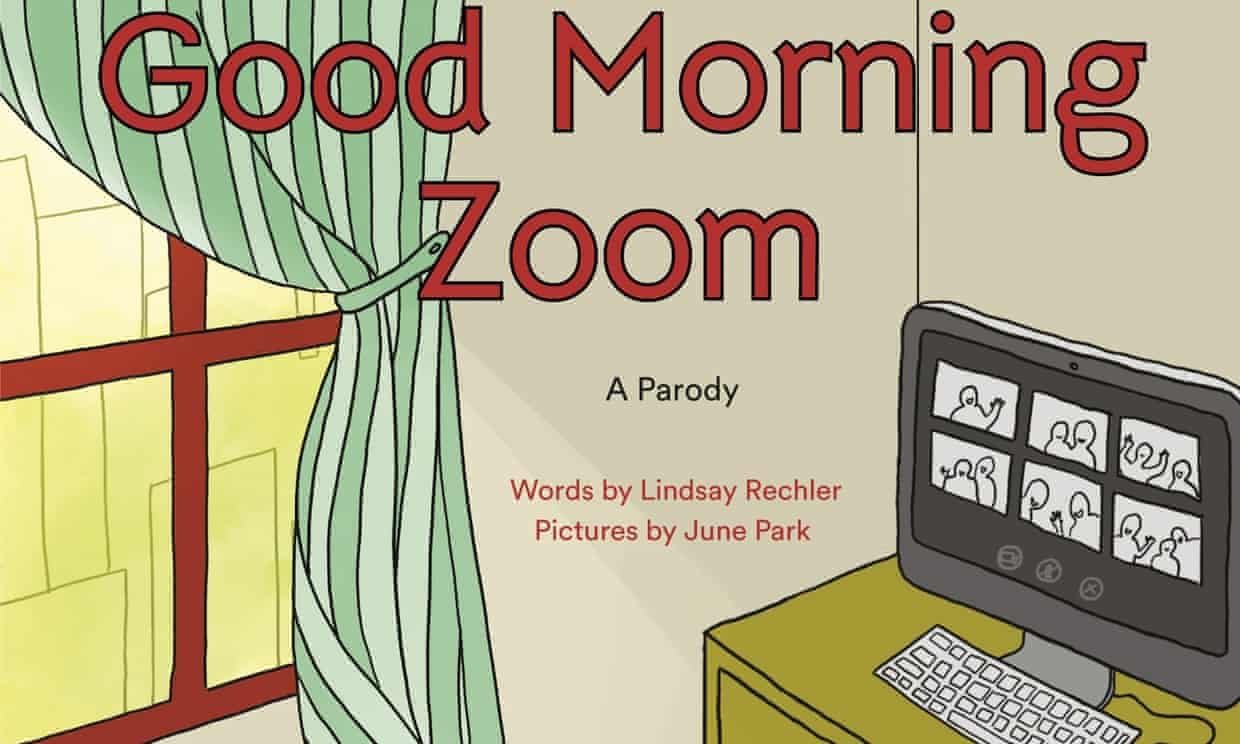
From The Guardian: Goodnight Moon redrawn as Good Morning Zoom for Covid-era kids


From BookRiot: 8 OF THE BEST YA BOOKS SET IN POST-APOCALYPTIC CITIES

From The Bookseller: Rosen and Blake team up for poems on migration

From Nathan Bransford: How to Spice Up Relationships in Novels

From Topher Payne: the tree who set healthy boundaries: an alternate ending for Shel Silverstein's "The Giving Tree"

From the NYT: Stephenie Meyer Is Telling Edward’s Story, Even if It Makes Her Anxious

From SLJ:
     Vote of Confidence: When It Comes to Teaching the 2020 Election, Educators Have a Plan
     RevolTeens: Helping Teens Through Revolting Times, by Christine Lively
     Morgan’s Mumbles: Healthy Habits, by teen contributor Morgan Randall

From PW - Covid affects on the industry are now coming in.
      Simon & Schuster is looking up: S&S Posts Q2 Profit Gain Despite Sales Decline
     While HMH is not doing as well: Sales at HMH Took Big Hit in Q2
     Here's the state of HarperCollins: Sales, Earnings Down at HC in Fiscal 2020


ILLUSTRATORS' TREEHOUSE NEWS
Note: Paperlike iPad covers are again available (the pandemic threw off production and shipping). I LOVE mine!

From Yahoo!Life: Black cartoonist's work on race relations and coronavirus prompted newspapers to drop it: 'I am being silenced over white feelings'

From TikTok: This 20-year-old college student made a stunning TikTok video that shows him transforming into superheroes using special effects he created himself. Hollywood is paying attention. Watch HERE

From Urban Sketchers: August Newsletter

From CommArts: They are holding their annual type competition (this includes hand-lettering projects) - students are welcome! See last year's winners here.

From Muddy Colors:
     Running with Both Legs
     SCOTT FISCHER PAINTS ‘FORCE OF WILL’ (demo)
     Dynamic Resources (Check out Sergio Toppi - OMG!)
     The Goal Folder This is a GREAT idea - I plan to do this!

From Yahoo!News: From 'Wild Horses' to 'Wild Things,' a window into Maurice Sendak's creative process

From The Art Room Plant: Last


OFF TOPIC BUT INTERESTING
From The NYT: John Lewis' last words to us: Together, You Can Redeem the Soul of Our Nation Though I am gone, I urge you to answer the highest calling of your heart and stand up for what you truly believe.


Faculty Catch Up: Ruth Sanderson

Today I'm thrilled to have renowned author/illustrator, and Co-Director of the Writing and Illustrating Children's Books MFA and Certificate programs at Hollins University, Ruth Sanderson at dulemba.com. She has a fantastic new book to share...

THE GOLDEN KEY
by Ruth Sanderson

      Reading "The Golden Key" close to forty years ago instilled in me a profound desire to some day create pictures that illuminated this evocative text. Over the years, when people have asked, “If there was one book you’d like to illustrate, what would it be?” —my answer has always been "The Golden Key" by George MacDonald. I loved the story, and the version I had was illustrated by Maurice Sendak with beautiful, dream-like pen and ink pictures. There were only 6 plates in the book, however, and I wanted to do a fully illustrated version.
     After I became a working author/illustrator I tried to edit down the story to fit a picture book format, but it didn’t feel right. The story is simply too long and complex for a picture book. So my "dream project" was put on the shelf for thirty years.            
     In 2007 with Brian Selznick's Invention of Hugo Cabret I became aware that artists were challenging the standard format of books for children. A few years later when thinking wistfully about how The Golden Key could absolutely never be made into a picture book in this climate of shorter and shorter texts, it occurred to me that this very long story might be easily broken into chapters, as it alternates between the two characters' points of view. I also felt that 8-12 was a more suitable age group for this unusual story than that of a younger picture book audience.
     In contemplating the style and medium to use, I felt that scratchboard would be perfect to convey the story's mythic quality and dramatic light and dark imagery. In my spare time between other book projects In 2011 I started to create some of the key scenes that I wanted to include in the story. My favorite scene is Tangle descending the stairway into the earth, and I always felt this was like Persephone descending into Hades.
      I split the story into 9 chapters and created a dummy that paged out to around 224 pages, carefully planning room for over 45 illustrations. Some are wordless spreads, some are single pages, and some are vignettes that wrap around the text. I wanted to create the look of a fully illustrated novel. It is really a very long picture book for an older audience.
     One thing that will set my version apart is the fact that, as a picture book illustrator, I decided to add elements that were not expressly stated in the text, that would “expand” the story and add an interesting subtext. This subtext was created as I mused on the object and meaning of the golden key itself and the fact that MacDonald places the key in Fairyland. I have framed the story with wordless pictures, one before the text of the story starts and one right after it ends. I have always been intrigued by the fact that the golden key seems to magically appear at the base of a rainbow in Fairyland. I imagined that perhaps a fairy might be put in charge of placing it there. And perhaps that fairy might arrange for a particular person to see the rainbow and seek the key. Or perhaps in "flitting from place to place" lest anyone should find the key, she notices a boy with a spark of desire for something beyond our normal human grasp.
     Therefore, in the first illustration, before the text begins, the creatures in Fairyland watch the boy as he listens to his great-aunt's stories. One fairy is sitting on a tree stump with the golden key. I imagined her observing his spark of interest in the key.
      After showing a close-up of this conversation between Mossy and his great-aunt at the start of the text, I added another wordless spread with the fairy flying off with the key, implying that she was going to hide it for the boy to find.
      And sure enough, he could not resist dashing into Fairyland that evening when he sees the rainbow, a "grand sight, burning away there in silence, with its gorgeous, its lovely, its delicate colors, each distinct, all combining."
                 At the end of the story, in the picture where Mossy and Tangle climb into the rainbow in the distance, the fairy flies off with the key in the foreground, indicating that their story is over, but another story is about to begin. The final wordless illustration shows the fairy bringing the key back to the base of the rainbow in the forest, looking back toward the reader—an invitation for the next person to seek the key.
                 George MacDonald considered Fairyland to be a symbol of the imagination, and he invited each reader to interpret his stories after his/her own sensibilities. I invite readers to interpret my pictures in the same light. For me, imagination is the Golden Key.